Jesus Shaves
by David Sedaris
"And what does one do on the fourteenth of July? Does one celebrate Bastille Day?"
It was my second month of French class, and the teacher was leading us in an exercise designed to promote the use of one, out latest personal pronoun.
"Might one sing on Bastille Day?" she asked. "Might one dance in the streets? Somebody give me an answer."
Printed in our textbooks was a list of major holidays accompanied by a scattered arrangement of photographs depicting French people in the act of celebration. The object of the lesson was to match the holiday with the corresponding picture. It was simple enough but seemed an exercise better suited to the use of the pronoun they. I didn't know about the rest of the class but when Bastille Day eventually rolled around, I planned to stay home and clean my oven.
Normally, when working from the book, it was my habit to tune out my fellow students and scout ahead, concentrating on the question I'd calculated might fall to me, but this afternoon we were veering from the usual format. Questions were answered on a volunteer basis, and I was able to sit back and relax, confident that the same few students would do most of the talking. Today's discussion was dominated by an Italian nanny, two chatty Poles, and a pouty, plump Moroccan woman who had grown up speaking French and had enrolled in the class hoping to improve her spelling. She'd covered these lessons back in the third grade and took every opportunity to demonstrate her superiority. A question would be asked, and she'd race to give the answer, behaving as though this were a game show and, if quick enough, she might go home with a tropical vacation or a side-by-side refrigerator/freezer. A transfer student, by the end of the first day she'd raised her hand so many times that her shoulder had given out. Now she just leaned back and shouted out the answers, her bronzed arms folded across her chest like some great grammar genie.
We'd finished discussing Bastille Day, and the teacher had moved on to Easter, which was represented in our textbooks by a black-and-white photograph of a chocolate bell lying upon a bed of palm fronds.
"And what does one do on Easter? Would anyone like to tell us?"
It was, for me, another of those holidays I'd just as soon avoid. As a rule, my family had always ignored the Easter celebration by our non-Orthodox friends and neighbors. While the others feasted on their cholocate figurines, my brother, sisters, and I had endured epic fasts, folding our bony fingers in prayer and begging for an end to the monotony that was the Holy Trinity Church. As Greeks, we had our own Easter, which was usually observed anywhere from two to four weeks after what was known in our circle as "the American version." The reason has to do with the moon or the Orthodox calendar -- something mysterious like that -- though our mother always suspected it was scheduled at a later date so that the Greeks could buy their marshmellow chicks and plastic grass at drastically reduced sale prices. "The cheap sons of bitches," she'd say. "If they had their way, we'd be celebrating Christmas in the middle of goddamn February."
Because our mother was raised a Protestant, our Easters were a hybrid of the Greek and the American traditions. We recieved baskets of candy until we grew older and the Easter Bunny branched out. Those who smoked would awaken to find a carton of cigarettes and an assortment of disposable lighters, while the others would receive an equivalent, each according to his or her vice. In the evening we had the traditional Greek meal followed by a game in which we would toast one another with blood-colored eggs. The symbolism escapes me, but the holder of the table's one uncracked egg was supposedly rewarded with a year of good luck. I won only once. It was the year my mother died, my apartment got broken into, and I was taken to th emergency room suffering from what the attending physician diagnosed as "house-wife's knee."
The Italian nanny was attempting to answer the teacher's latest question when the Moroccan student interrupted, shouting, "Excuse me, but what's an Easter?"
It would seem that despite having grown up in a Muslim country, she would have heard it mentioned once or twice, but no. "I mean it," she said. "I have no idea what you people are talking about."
The teacher called on the rest of us to explain.
The Poles led the charge to the best of their ability. "It is," said one, "a party for the little boy of God who call his self Jesus...oh shit." She faltered and her fellow country-man came to her aid.
"He call his self Jesus and then he be die one day on two...morsels of...lumber."
The rest of the class jumped in, offering bits of information that would have given the pope an aneurysm.
"He die one day and then he go above of my head to live with your father."
"He weared of himself the long hair and after he die, the first day he come back here for to say hello to the peoples."
"He nice, the Jesus."
"He make the good things, and on the Easter we be sad because somebody makes him dead today."
Part of the problem had to do with vocabulary. Simple nouns such as cross and resurrection were beyond our grasp, let alone such a complicated refexive phrases as "to give of yourself your only begotten son." Faced with the challenge of explaining the cornerstone of Christianity, we did what any self-respecting group of people might do. We talked about food instead.
"Easter is a party for to eat of the lamb," the Italian nanny explained. "One too may eat of the chocolate."
"And who brings the chocolate?" the teacher asked.
I knew the word, so I raised my hand, saying, "The rabbit of Easter. He bring of the chocolate."
"A rabbit?" The teacher, assuming I'd used the wrong word, positioned her index fingers on top of her head, wriggling them as though they were ears. "You mean one of these? A rabbit rabbit?"
"Well, sure," I said. "He come in the night when one sleep on bed. Which a hand he have a basket and foods."
The teacher sighed and shook her head. As far as she was concerned, I had just explained everything wrong with my country. "No, no," she said. "Here in France the chocolate is brought by a a big bell that flies in from Rome."
I called for a time-out. "But how do the bell know where you live?"
"Well," she said, "how does a rabbit?"
It was a decent point, but at least a rabbit has eyes. That's a start. Rabbits move from place to place, while most bells can only go back and forth -- and they can't even do that on their own power. On top of that, the Easter Bunny has character. He's someone you'd like to meet and shake hands with. A bell has all the personality of a cast-iron skillet. It's like saying that come Christmas, a magic dustpan flies in from the North Pole, led by eight flying cinder blocks. Who wants to stay up all night so they can see a bell? And why fly one in from Rome when they've got more bells than they know what do to with here in Paris? That's the most implausible aspect of the whole story, as there's no way the bells of France would allow a foreign worker to fly in and take their jobs. That Roman bell would be lucky to get work cleaning up after a French bell's dog -- and even then he'd need papers. It just didn't add up.
Nothing we said was of any help to the Moroccan student. A dead man with long hair supposedly living with her father, a leg of lamb served with palm fronds and chocolate; equally confused and disgusted, she shrugged her massive shoulders and turned her attention to the comic book she kept hidden beneath her binder.
I wondered then if, without the language barrier, my classmates and I could have done a better job making sense of Christianity, an idea that sounds pretty far-fetched to begin with.
In communicating any religious belief, the operative word is faith, a concept illustrated by our very presence in that classroom. Why bother struggling with the grammar lessons of a six-year-old if each of us didn't believe that, against all reason, we might eventually improve? If I could hope to one day carry on a fluent conversation, it was a relatively short leap to believing that a rabbit might visit my home in the middle of the night, leaving behind a handful of chocolate kisses and a carton of menthol cigarettes. So why stop there? If I could believe in myself, why not give other improbabilties the benefit of the doubt? I told myself that despite her past behavior, my teacher was a kind and loving person who had only my best interests at heart. I accepted the idea that an omniscient God had cast me in his own image and that he watched over me and guided me from one place to the next. The Virgin Birth, the Ressurrection, and countless miracles -- my heart expanded to encompass all the wonders and possibilities of the universe.
A bell, though -- that's fucked up.
Saturday, April 15, 2006


Friday, April 14, 2006
Good Friday?
 Iowa City firefighters inspect St. Patrick's Catholic Church in Iowa City, Iowa, after the part of the roof was ripped off as a tornado struck the city Thursday, April 13, 2006. Several tornadoes that ripped through eastern Iowa left some neighborhoods in disarray as heavy winds and hail destroyed cars, crushed homes and cut off power to thousands of Iowans. No major injuries have been reported.
(AP Photo/Matthew Holst, Iowa City Press-Citizen)
I will never complain about airport delays again if it means I won't be flying through weather that could cause such destruction. This is the reason we were on the runway for a couple of hours in Chicago last night. It is fortunate that there were not more people seriously injured or killed here in Iowa City. Photo from above ran on front page of local paper and the Washington Post also picked up the wire story.
http://www.washingtonpost.com/wp-dyn/content/article/2006/04/14/AR2006041400508.html
More photos here...
http://www.kcci.com/slideshow/weather/8693114/detail.html?qs=1;s=1;dm=ss;p=weather;w=400
Tuesday, April 11, 2006
Substitutiary Locomotion
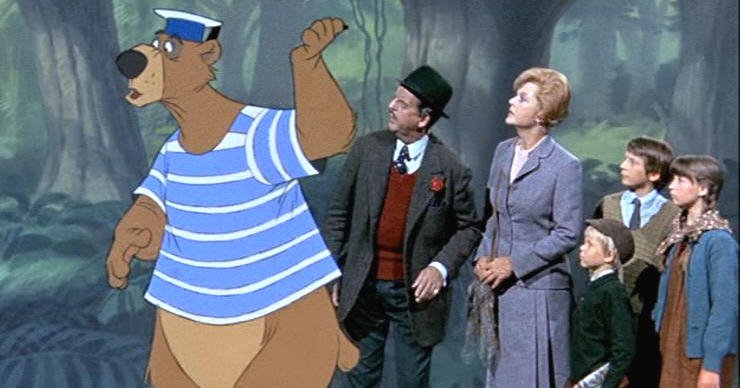 Greetings from the Isle of Naboombu! Well, Columbus actually. The above film was on tv when I returned from dinner after work and it is about all my brain can handle. Bedknobs & Broomsticks was one of my favorite Disney films I remember from youth. It was neglected and often overlooked. The 30th anniversary dvd restored a lot of footage and a few songs although some of the orginal cuts have been lost for good. I enjoyed it although it does not age quite as well as I remeber but the cartoon scenes still hold up. Now if only someone give Dr Syn, Alias the Scarecrow the same restorative treatment I could die a happy man. Treguna Mekoides Tracorum Satis Dee. And now I must go retrieve my laundry and then collapse.
A Clear Midnight
THIS is thy hour O Soul, thy free flight into the wordless,
Away from books, away from art, the day erased, the lesson done,
Thee fully forth emerging, silent, gazing, pondering the themes thou lovest best.
Night, sleep, and the stars.
by Walt Whitman
Saturday, April 08, 2006
This is not a love song

Is it a coincidence that blog rhymes with bog? I wandered into the author's website looking for a discography of the bands discussed that was mentioned in Powell's review and from there to his blog and blogs he linked to and the next thing I knew I had lost an hour. Anyway this book which I just started is excellent. Loads of behind the scenes gossip and info. It is perfect compliment up who liked or read Legs McNeil's oral history of punk Please Kill Me a good read for anyone who came of age listening to music before and during the rise of MTV. At times though when he is talking about the music I feel like the narrator in Whitman's astronomy poem who wanders from the lecture outside to look at the stars but in my case I want to dig through my tapes and crank up some PIL. Although now that I think of it I didn't mind my astronomy class at UConn. The professor was a trip, we saw some cool things in a big telescope, the class was large so the curve was ridiculous, it counted as a Math class, and I learned about Tycho Brahe. Like that he had a metal nose due to a duel injury in his youth. What he did for astronomy? Not so sure anymore. Hmmmm... Tycho Brahe's Nose for the name of an 80's post-punk band? I like it.
P.S.
Someone mentioned that U.K version of book might be worth tracking down as some things more pointedly British may have been excised in the American printing.
Friday, April 07, 2006
Thursday, April 06, 2006
Bishop Redux
Helen Vendler in New Republic has problems with the new Elizabeth Bishop collection at Powell's Review-A-Day website. She makes a perusuasive case and I admit to being a bit disappointed although I will still buy the book.
The Art of Losing
A review by Helen Vendler
"This book should not have been issued with its present subtitle of "Uncollected Poems, Drafts, and Fragments." It should have been called "Repudiated Poems." For Elizabeth Bishop had years to publish the poems included here, had she wanted to publish them. They remained unpublished (not "uncollected") because, for the most part, they did not meet her fastidious standards (althougha few, such as the completed love poem "It is marvellous to wake up together," may have been withheld out of prudence). Students eagerly wanting to buy "the new book by Elizabeth Bishop" should be told to go back and buy the old one, where the poet represents herself as she wished to be known. The eighty-odd poems that this famous perfectionist allowed to be printed over the years are"Elizabeth Bishop" as a poet. This book is not. "
Continues here:
http://www.powells.com/review/2006_04_06
Times article about Vendler review here:
http://www.nytimes.com/2006/04/01/books/01bish.html
The Art of Losing
A review by Helen Vendler
"This book should not have been issued with its present subtitle of "Uncollected Poems, Drafts, and Fragments." It should have been called "Repudiated Poems." For Elizabeth Bishop had years to publish the poems included here, had she wanted to publish them. They remained unpublished (not "uncollected") because, for the most part, they did not meet her fastidious standards (althougha few, such as the completed love poem "It is marvellous to wake up together," may have been withheld out of prudence). Students eagerly wanting to buy "the new book by Elizabeth Bishop" should be told to go back and buy the old one, where the poet represents herself as she wished to be known. The eighty-odd poems that this famous perfectionist allowed to be printed over the years are"Elizabeth Bishop" as a poet. This book is not. "
Continues here:
http://www.powells.com/review/2006_04_06
Times article about Vendler review here:
http://www.nytimes.com/2006/04/01/books/01bish.html
Life Doesn't Frighten Me

The Fun Gallery
A buzz in the air
already, Basquiat
beaming. RAY GUN
set to stun
—maximum—a hold
up in this hole
in the wall,
a billion
paintings pinned
to dry wall
like butterflies,
stomachs. He’s made it
all from scratch
& paint.
The work’s too low
his dealer warned—
everything should be higher
to keep up
your prices,
speed. All night
the crowds line
outside like Disneyland
& love it. Taken
over Manhattan
he’s King
Kong or Mighty Joe
Young, social
climbing—gone
from trains
to scale the Empire
State. Keeping most
of the show
for hisself, hitches
a limo to Bklyn
by dawn—the armored
car hour—up
early—or late—
as if to his own
funeral—
“Papa I’ve made it”
hugs & hands
him a blooming
bouquet.
Kevin Young
Knopf has a daily poem email this month to celebrate National Poetry Month and to sell a few books. The website also has a podcast of authors reading their poems. A little while back I watched Basquiat again and after seeing an interview with Jean-Michel Basquiat I thought that Jeffrey Wright really nailed the title role. When my nephew John was little I gave him Maya Angelou's book Life Doesn't Frighten Me with selected artwork by Basquiat and if I recall I think it was too scary for him at that age or at least it was not one of his favorite books.
I just heard that Mike Doughty will playing at The Mill on May 5th. Naturally since I have never seen him live I will be out of town that Friday. But if Paris is worth a Mass then I think my first visit to Seattle is worth missing a show at The Mill.
Monday, April 03, 2006
One Artist
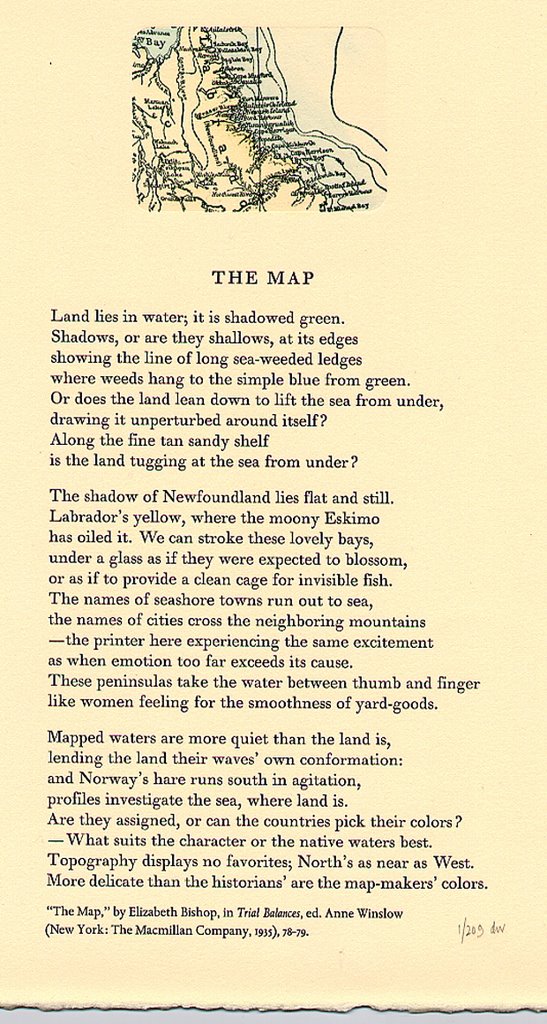 Taking advantage of the recent publication of her new book and the cover story review in NY Times I chose to continue the celebration of National Poetry Month with Elizabeth Bishop whose poems I cherish. This poem (click to enlarge) and especially the truth of the closing line touched me more than I can remember being moved by any poem previously. I had a recently acquired a degree in History and Political Science and during college had attended very few classes that involved poetry beyond freshman year. The ones that did tended to tread over the familiar ground of the classics or the over-anthologized and we rarely made it to the moderns unless an instructor forced us to read the poetry of the so called 'disenfranchised'. Political poems or poems with an obvious agenda sucked the joy out the whole process for me and so I tended to avoid contemporary poets until after graduation. Bishop's Geography III is one of the collections that expanded my scope to include poets who I came to realize also may have had an agenda but that never let it overshadow or diminish the art.
I also love reading the letters of the literary and Bishop's Collected Letters, One Art , is one the most entertaining volumes of correspondence I have ever dipped into and would recommend it to all who enjoy reading other people's mail.
Saturday, April 01, 2006
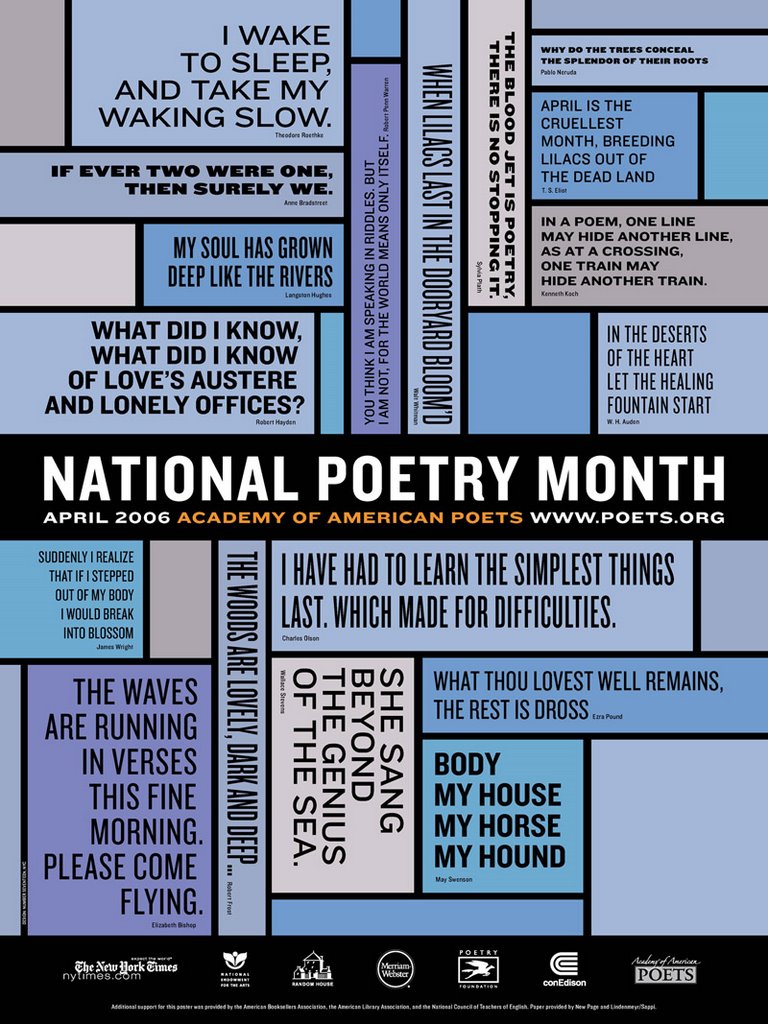
Why is April the cruellest month?
Introduction to Poetry
I ask them to take a poem
and hold it up to the light
like a color slide
or press an ear against its hive.
I say drop a mouse into a poem
and watch him probe his way out,
or walk inside the poem's room
and feel the walls for a light switch.
I want them to waterski
across the surface of a poem
waving at the author's name on the shore.
But all they want to do
is tie the poem to a chair with rope
and torture a confession out of it.
They begin beating it with a hose
to find out what it really means.
Billy Collins
The Apple that Astonished Paris
Poetry Daily has a special feature to celebrate National Poetry Month....
http://poems.com/news.htm
As does the Academy of American Poets....
http://www.poets.org/
Scholastic website for all ages...
http://teacher.scholastic.com/lessonrepro/k_2theme/poetry.htm
Jane Smiley has an article in Guardian UK about her battle with writer's block and what she did to overcome the affliction by reading a hundred novels (is it 'a' or 'one' or both that modifies a hundred?) . It heralds a new column starting next week. Although I did not like the film version of her take on Lear (did not read book so I can't say if they butchered it or she did) . I thought Moo was funny but can't remember if I finished it. Too many books and and an ever dwindling supply of brain cells. Here is the link.
http://books.guardian.co.uk/review/story/0,,1737939,00.html
Saving the best for last. Head on over to the Pho King Westling's site to see the newest addition... Congratulations to the parents and big brother and welcome to the world Claire.
Thursday, March 30, 2006

Talent Show
Replacements Reunite For New Songs
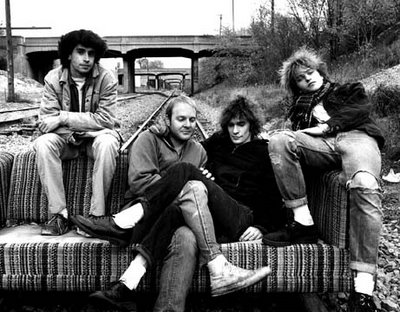
"As tipped yesterday (March 28) on Billboard's Jaded Insider blog, Replacements members Paul Westerberg, Tommy Stinson and Chris Mars have reunited to record two new songs for an upcoming retrospective, "Don't You Know Who I Think I Was?: The Best of the Replacements." Due June 13 via Rhino, the set will feature "Message to the Boys" and "Pool & Dive," the band's first new recordings in 16 years."
"As tipped yesterday (March 28) on Billboard's Jaded Insider blog, Replacements members Paul Westerberg, Tommy Stinson and Chris Mars have reunited to record two new songs for an upcoming retrospective, "Don't You Know Who I Think I Was?: The Best of the Replacements." Due June 13 via Rhino, the set will feature "Message to the Boys" and "Pool & Dive," the band's first new recordings in 16 years."
This is even more exciting than getting the first disc of Six Feet Under Season 5 last night in the mail. I am eager to hear the new material and just wish there was more. I was more pumped up about the Pixies getting back together because I had never seen them live. I did get the oppurtunity to see the 'Mats a few times before their demise. Once at a small outdoor stage near an amusement park in CT during the final days of the band when they opened Elvis Costello and once when they were headlining at a club called One Step Beyond in Santa Clara, CA on the Don't Tell A Soul tour. Both times band seemed relatively sober and we were fortunate it was not of the infamous shows in which they were plastered and played all cover songs...poorly. I just wish they would reunite for a new tour. If only the Pixies would record a new album as has been rumoured.
Wednesday, March 29, 2006

As an
"In Memory of the Utah Stars"
Something in you remembers every
time the ball left your fingertips
wrong and nothing the ball
can do in the air will change that.
You watch it set, stupid moon,
the way you watch yourself
in a recurring dream.
You never lose your touch
or forget how taxed bodies
go at the same pace they owe,
how brutally well the universe
works to be beautiful,
how we metabolize loss
as fast as we have to.
P.S. I have also added former Soul Coughing frontman Mike Doughty's blog to my list...he has a lot of pictures from his trip to Eritrea and I dig his new record.
Tuesday, March 28, 2006
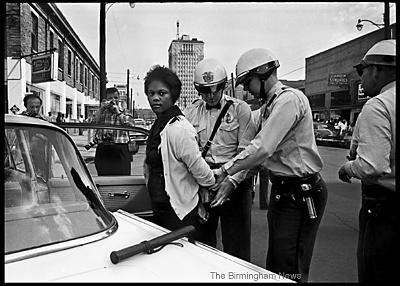
May 7, 1963: Birmingham Police arrest Parker High School student Mattie Howard in front of the Carver Theatre. Youths became an integral part of the civlil rights movement when the Children's Crusade began on May 2.
I was tipped off to the site that this photo is from by an email newsletter, Tourbus, which mostly is a FAQ and help site about the internet. Although the authors do come up with some interesting links now and again.
There are dozens of pictures taken from a recently discovered treasure trove of around 5,000 photos documenting Civil Rights Movement featured at The Birmhingam News links below...
A pdf file of the spread from The Birmhingham News is here...
http://www.al.com/unseen/unseen.pdf
The site from paper is here...
http://www.al.com/unseen/
Monday, March 27, 2006

Tom, a friend and former coworker from back east, likes to send emails of with photos from his digital camera. Usually they are shots of him with random women at Red Sox or Patriot games. Many pictures feature his red Dodge Ram truck. Sometimes he even sends a picture of his son. This one surprised me as it is a fairly decent shot of the beach at Groton Long Point. You can make out Fisher's Island NY on the horizon. This beach on the Sound and a great place to see live bands in the summer. I think I need to see an ocean soon as I am getting a little nostalgic.
Tuesday, March 21, 2006
Triumph of Death
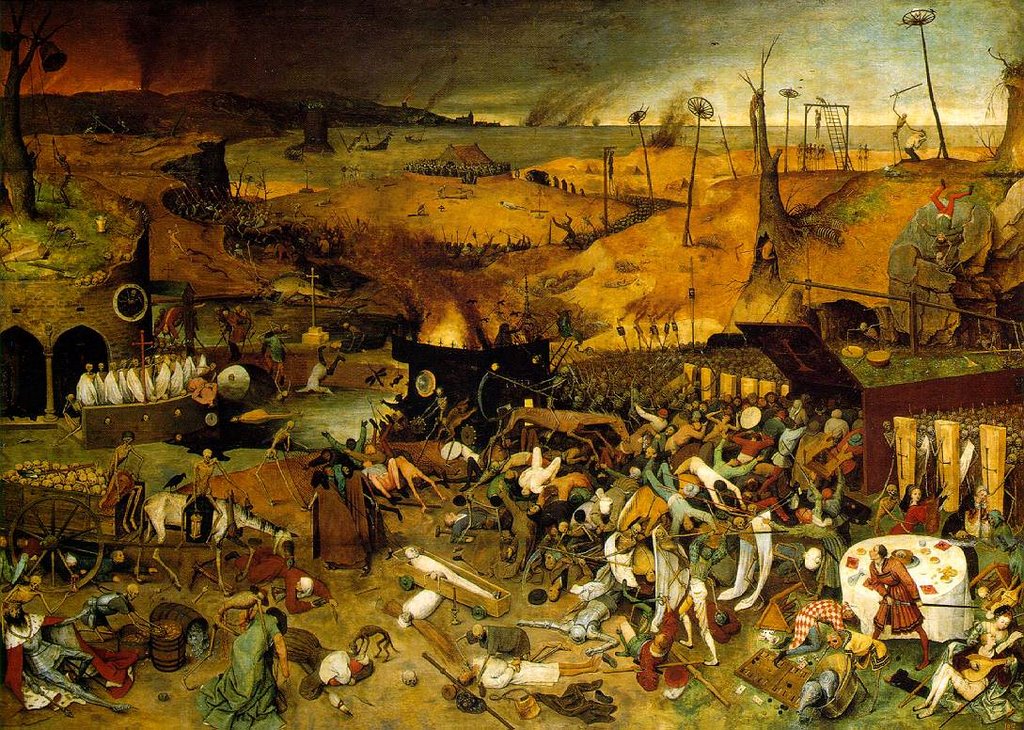
It has been a hectic week. Returned from Columbus (Red State, sorry I was too busy to get some Korean food with you this time. Will be back in state week of April 9-13).
I will try and keep up the site. It may be infrequent posting until work settles down later this week but I assure you the quality will continue to be sub-par. For various reasons mostly related to work and the Martin Amis book Experience, I have been thinking of the above by Bruegel. I first ran across this at Uconn in a history class on the Reformation which initially sparked more of an interest in the art of this period.
Thursday, March 16, 2006
Scenes From A Mall

Driving a sports car such as this might say something of one's personality. Parking said vehicle in such a manner speaks volumes.
Tuesday, March 14, 2006
And the award for actual news site that most closely resembles The Onion goes to...
Top Story
Local Woman Writes Novel
A Cedar Rapids woman released her first novel Monday evening. It's a story based loosely on her life. Christina McGriff spent a month and a half writing her first novel.Complete Story...
Record Food Stamp Numbers
An all-time record number of Iowans received food stamps in February. But the Iowa Department of Human Services is not concerned. In fact, the higher numbers are part of a plan and not a sign of economic distress.Complete Story...
Hawk Fans Celebrating Big 10 Champs
Gas Grills In Marion
Deadly Fire in Coralville
Deadly fire is buried as the fifth lead? To be fair the broadcast version at 8:00 am lead with an identity theft story. And if the poor woman's novel is only currently available online how about providing a link? Then again perhaps there was a reason for that.
Local Woman Writes Novel
A Cedar Rapids woman released her first novel Monday evening. It's a story based loosely on her life. Christina McGriff spent a month and a half writing her first novel.Complete Story...
Record Food Stamp Numbers
An all-time record number of Iowans received food stamps in February. But the Iowa Department of Human Services is not concerned. In fact, the higher numbers are part of a plan and not a sign of economic distress.Complete Story...
Hawk Fans Celebrating Big 10 Champs
Gas Grills In Marion
Deadly Fire in Coralville
Deadly fire is buried as the fifth lead? To be fair the broadcast version at 8:00 am lead with an identity theft story. And if the poor woman's novel is only currently available online how about providing a link? Then again perhaps there was a reason for that.
Monday, March 13, 2006
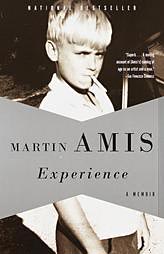
I often find myself juggling several books at once without a problem. Every once in a while I attempt too many and as my reach extends my grasp they all come tumbling down. After sweeping up the mixed metaphors, I reshelve some of the them and return the rest to the library and attempt to focus on one book.
The book that caused the most recent collapse is Martin Amis's Experience which I found while browsing at The Book End. I picked it up glanced at it for a bit and then moved it from fiction to its proper spot on the memoir shelf near a copy of Traci Lords: Underneath it All. I made another lap around the store. I picked it up again (the Amis not the Lords book as I had paged through it on a previous visit) and read some more. Five mintues later and two dollars fewer I was on my way. It was a steal.
I have read more about Amis then of him and it seems the Brits or at least the press and critics have a love/hate relationship with him, enfant terrible being the most frequently used sobriquet. His novel Night Train is the only one of his that I have read and with pleasure. A dark take on the detective novel. A genre so well known for its happy endings. I seem to have lost or misplaced an autographed copy of London Fields in one of my many moves. (I have never read his father Kingsley Amis most known I suppose for Lucky Jim. Amis père, as Christopher Hitchens has noted, was a forerunner in the humorous literary campus novel so prevalent today.)
Experience is difficult to categorize strictly as autobiography since the memoir addresses becoming a writer, growing up the son of a writer, the disappearance and death of a cousin, becoming a father, failing romances, marriage, literary contemporaries, losing his teeth, and the death of his father. Plus it has lots of footnotes which I love. I would compare it to Speak, Memory by Nabokov, a stated influence and clearly a favorite of his . Martin Amis has clearly dealt with lot of pain and caused no undue amount as well and all without losing his sense of humor or knowing who he is.
Naturally about half way through this book I checked out Lucky Jim from the library. Time to start juggling again.

Saturday, March 11, 2006
October 25, 1986
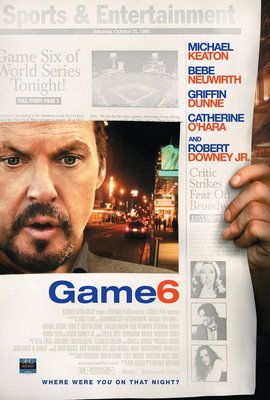
Where were you on that night? It's the tagline to a new movie with a screenplay by Don Delillo about Game Six of the World Series, Mets vs. Red Sox in what turned out to be a game that until 2004 was the closest the Sox came to winning the World Series in almost 80 years. In fact, I doubt this film could have been shown in New England if Sox had not won in 2004. No Sox fan alive wants to see the ball rolling between the wrongfully maligned Bill Buckner's legs on a big screen. The film is currently in limited release and I have not seen any reviews yet. I am curious not only because of the subject but also to see what Delillo has done. The Pafko at the Wall section of Underworld is as poetic a portrayal of a famous (or infamous depending on your team) ball game as baseball gets. Almost as beautiful as Updike's essays on the 1967 Red Sox or Ted Williams last game. Although I am a big fan of Delillo earlier works, I was not able to get through his book Cosmopolis and the previous one, The Body Artist left me mostly confused. So I suppose I am rooting for a return to form like that bastard Clemens after he left the Sox. But I digress.
Where was I? I have drawn a complete blank as to what I did that night. I was in San Francisco ostensibly doing Korean homework, probably at a bar called the Black Fox. I don't think they even had a TV set. I do know that I was not really following baseball much at all after the 1981 strike. I became a Sox fan after moving to southeastern Connecticut (You were either a Sox fan or a Yankee fan but anyone rooting for the Yankees east of Bridgeport was considered a band wagon fan and subject to well deserved abuse) and I had also been a Bill Buckner fan since being told he was the most famous alumni of our little Vallejo school, Napa Valley Elementary. (Well most famous to 8 year old boys at least. There could have been Nobel Laureates that attended and we would have been clueless unless they were pictured on a Topp's bubble gum card.)
Anyway, I was always more crushed by the Red Sox losing the one game playoff to the Yankees in 1978 then I was the '86 series. At the time of World Series I was in the Army, distracted by the attractions of San Francisco , struggling to do well in Korean so I would not get reassigned as a petroleum supply specialist in the Sinai. (This happened to some classmates.) So I really wasn't paying too much attention to baseball. In1978 the Sox had blown a huge lead in the standings but I still had hope. In 1986 after Game Six, I knew there was none. Not until the 2004 ALCS against the Yankees. "Our losses were repaired." I still wish I could remember where I was. Someone had recentlu given me a copy of Endzone so perhaps I was reading Delillo for the first time. Probably not.
Friday, March 10, 2006

It was time to swap my art from library. From some reason this one by Diego Rivera stood out from all the rest after a week of snow, rain, and a outdoor palette of grey. I still need to see Julie Taymor's Frida.
Wednesday, March 08, 2006
When is it okay to drink before 10 am?
ESPN's the sports guy came up with a modified list in response to a reader pointing out some omissions. I was trying to think if he left any other situations out. For me it would be St. Patrick's Day when conditions are appropriate. Say, for example, when you are in Cancun for your first and only Spring break as a college senior while there is a blizzard going on back in New England. Although that might just fall under the envelope of Spring Break rule of being able to drink 24/7 although we did generally wait until noon that being the time when we usally woke up on the beach quite thirsty and in need of more sunscreen. I will try to dig up some pictures. I need a scanner.
Here is his list.
SG: You're right, I completely blew that list the first time around; I'm taking a mulligan. Here's my official "When it's OK to drink before 10 a.m." list:
While attending football tailgates, college reunions or the Boston Marathon … during your final two weeks of college … during any Vegas trip or bachelor party or guys-only golf outing … if you pulled an all-nighter and haven't left a strip club yet … before any wedding that starts at 1 p.m. or earlier … any time your in-laws are visiting … during any morning when it's below 10 degrees … if you're dating an actress and just attended a movie premiere during which she had a graphic sex scene with someone else on a 50-foot screen … while living in any town in Canada that's farther than 75 miles from Toronto, Montreal, Ottawa or Vancouver … if you've been writing for a late-night talk show for more than two years … if your name is "Jack Nicholson" … before your fantasy football draft if you're trying to get the ball rolling so some of your other buddies get plastered … and if you're Vin Baker and you're getting checks from four different NBA teams at the exact same time.
Here is his list.
SG: You're right, I completely blew that list the first time around; I'm taking a mulligan. Here's my official "When it's OK to drink before 10 a.m." list:
While attending football tailgates, college reunions or the Boston Marathon … during your final two weeks of college … during any Vegas trip or bachelor party or guys-only golf outing … if you pulled an all-nighter and haven't left a strip club yet … before any wedding that starts at 1 p.m. or earlier … any time your in-laws are visiting … during any morning when it's below 10 degrees … if you're dating an actress and just attended a movie premiere during which she had a graphic sex scene with someone else on a 50-foot screen … while living in any town in Canada that's farther than 75 miles from Toronto, Montreal, Ottawa or Vancouver … if you've been writing for a late-night talk show for more than two years … if your name is "Jack Nicholson" … before your fantasy football draft if you're trying to get the ball rolling so some of your other buddies get plastered … and if you're Vin Baker and you're getting checks from four different NBA teams at the exact same time.
Tuesday, March 07, 2006
Frederick Busch
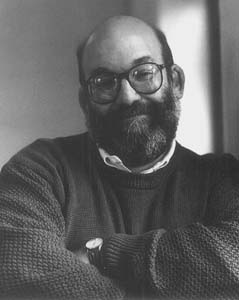
I was saddened to read about the death of the writer Frederick Busch. I was a big fan of the two historical novels of his that I read. The Night Inspector is the tale of a disfigured Civil War veteran who befriends a lonely, frustrated, novelist working in New York City customs office, Herman Melville. The writer has been forgotten after his first two sensational novels about his seafaring experiences sold well and his masterpiece of the whale has been published without fanfare or interest. I also read his Dickens novel, Our Mutual Friend with pleasure.
from L.A. Times...
Frederick Busch, 64; a 'Writer's Writer,' Former Professor at Colgate University
By Mary Rourke, Times Staff WriterMarch 2, 2006
Frederick Busch, the author of close to 30 books, many of them novels and collections of short stories about the hardships and anguish of ordinary people, has died. He was 64.A former professor of literature at Colgate University in Hamilton, N.Y., Busch suffered a heart attack during a visit to New York City and died Feb. 23 at Bellevue Hospital Center, his family said. He had been a resident of Sherburne, in central New York state.
Using his local environs as the setting for many of his novels, Busch "brought central New York alive for millions of readers," Colgate President Rebecca S. Chopp said in a recent statement.He was often referred to as a "writer's writer," and his work was compared to that of such literary masters as Raymond Carver and John Cheever. Busch received a number of prestigious awards, including the American Academy of Arts and Letters fiction award in 1986 and the PEN/Malamud prize in 1991. Busch once said his goal was to be "a really honest, minor writer of the 20th century."
Many of Busch's stories are about good people going through hard times. "Manual Labor" (1974) tells of a married couple struggling with repeated miscarriages. "Rounds" (1979) follows a medical doctor as he copes with the death of his son. "Girls" (1997), one of Busch's best received novels, is about a husband and wife who are losing touch after 20 years together."We're not talking about wife beaters here," Greiner said of "Girls" in a 1997 interview with National Public Radio. "We're talking about the little tensions that build and build and build. I think [Busch] is very, very good at suggesting a kind of domestic heroism, what it takes to hold a family together".
Two of Busch's novels blend fictional characters with figures from history. "The Mutual Friend" (1978) is about 19th century British novelist Charles Dickens. The Guardian newspaper in London called it one of the 10 best books of the year, though a reviewer for the New York Times said it was "often brilliant, but inert.""The Night Inspector" (1999) features American author Herman Melville, a once-prominent writer who was nearly forgotten by the time he died in the late 1800s.In Busch's story, Melville interacts with a Civil War veteran in what a reviewer for Publishers Weekly called a "serious, nuanced, meditation on history."
Busch's interest in his vocation led to a book of essays called "A Dangerous Profession: A Book About the Writing Life" (1998). In it he reflected on the work of Ernest Hemingway, Graham Greene and other authors he admired. He also described his own experiences as a writer."Read this book if you are a beginning writer who wants the assurance that others, too, have written, submitted and been rejected over and over again," wrote a reviewer for the New York Times. "Read it if you are an established writer and want to see the continuing doubt and despair of those who have produced great books."
Born in Brooklyn, N.Y., Busch graduated from Muhlenberg College in Allentown, Pa. He married Judith Burroughs in 1963, and they had two children, Benjamin and Nicholas.Busch joined the faculty of Colgate in 1966. The next year he received a master's degree in literature from Columbia University. He continued to teach at Colgate until 2003. One of his most popular courses featured living writers, many of whom he brought to the campus to read and discuss their work with students. He was also acting director of the creative writing program at University of Iowa in 1978 and 1979. Besides his wife and sons, he is survived by a grandchild, Alexandra.
Monday, March 06, 2006
Did anyone else think that Jack Nicholson called an audible when he read Crash over Brokeback Mountain as best picture winner last night? Was anyone else still awake? I saw it as similar to the conspiracy theory going around at the time when Jack Palance selected Marisa Tomei over the four Brits for supporting actress. Perhaps not that much of a stretch though.
As for films about race, I am much more inclined to try and see Tsotsi, the foreign film winner from South Africa based on novel by reknowned playwright Athol Fugard. I first saw Fugard's play Master Harold and the Boys in its pre-Broadway run in New Haven while in high school. It moved me so much that I made my combined social studies/english project that year on apartheid and Fugard.
Coincidentally, I have recently started reading a novel with racial issues set in America circa 19th century. The Amalgamation Polka by Stephen Wright is set in the Civil War. Main character Liberty Fish is son of Northern father and abolitionst Southern mother. I just started it so can't really say too much about it except that I have always liked Wright's prose. One blurb called it a cross between Heart of Darkness and Alice in Wonderland. Wright is a graduate of Iowa Writer's Workshop and former Army Intelligence soldier during Vietnam (Meditations in Green is his novel of Vietnam that I have mentioned here before that I loved).
And perhaps not completely coincidental is today's poem from Poetry Daily....
Miscegenation
In 1965 my parents broke two laws of Mississippi;
they went to Ohio to marry, returned to Mississippi.
They crossed the river into Cincinnati, a city whose name
begins with a sound like sin, the sound of wrong – mis in Mississippi.
A year later they moved to Canada, followed a route the same
as slaves, the train slicing the white glaze of winter, leaving Mississippi.
Faulkner's Joe Christmas was born in winter, like Jesus, given his name
for the day he was left at the orphanage, his race unknown in Mississippi.
My father was reading War and Peace when he gave me my name.
I was born near Easter, 1966, in Mississippi.
When I turned 33 my father said, It's your Jesus year – you're the same
age he was when he died. It was spring, the hills green in Mississippi.
I know more than Joe Christmas did. Natasha is a Russian name –
though I'm not; it means Christmas child, even in Mississippi.
Natasha Trethewey
Native Guard
Houghton Mifflin Company
As for films about race, I am much more inclined to try and see Tsotsi, the foreign film winner from South Africa based on novel by reknowned playwright Athol Fugard. I first saw Fugard's play Master Harold and the Boys in its pre-Broadway run in New Haven while in high school. It moved me so much that I made my combined social studies/english project that year on apartheid and Fugard.
Coincidentally, I have recently started reading a novel with racial issues set in America circa 19th century. The Amalgamation Polka by Stephen Wright is set in the Civil War. Main character Liberty Fish is son of Northern father and abolitionst Southern mother. I just started it so can't really say too much about it except that I have always liked Wright's prose. One blurb called it a cross between Heart of Darkness and Alice in Wonderland. Wright is a graduate of Iowa Writer's Workshop and former Army Intelligence soldier during Vietnam (Meditations in Green is his novel of Vietnam that I have mentioned here before that I loved).
And perhaps not completely coincidental is today's poem from Poetry Daily....
Miscegenation
In 1965 my parents broke two laws of Mississippi;
they went to Ohio to marry, returned to Mississippi.
They crossed the river into Cincinnati, a city whose name
begins with a sound like sin, the sound of wrong – mis in Mississippi.
A year later they moved to Canada, followed a route the same
as slaves, the train slicing the white glaze of winter, leaving Mississippi.
Faulkner's Joe Christmas was born in winter, like Jesus, given his name
for the day he was left at the orphanage, his race unknown in Mississippi.
My father was reading War and Peace when he gave me my name.
I was born near Easter, 1966, in Mississippi.
When I turned 33 my father said, It's your Jesus year – you're the same
age he was when he died. It was spring, the hills green in Mississippi.
I know more than Joe Christmas did. Natasha is a Russian name –
though I'm not; it means Christmas child, even in Mississippi.
Natasha Trethewey
Native Guard
Houghton Mifflin Company
Friday, March 03, 2006
Playing with my cell phone camera

Spring (Hot pepper plants I started a couple weeks ago)
Winter (View from outside my front door)
Denial
I am not hungover.
I am not hungover.
Not hungover am I.
Am I hungover? Not!
Hungover am I not.
Am hungover? Not I.
I hungover not am.
I am hungover. (Not).
Not I am hungover.
Hungover I am not.
Am I not hungover?
Not am I hungover.
I not am hungover.
Hungover not am I.
David Lehman
I am not hungover.
Not hungover am I.
Am I hungover? Not!
Hungover am I not.
Am hungover? Not I.
I hungover not am.
I am hungover. (Not).
Not I am hungover.
Hungover I am not.
Am I not hungover?
Not am I hungover.
I not am hungover.
Hungover not am I.
David Lehman
Thursday, March 02, 2006
Sex Pistols to Hall of Fame, Piss Off
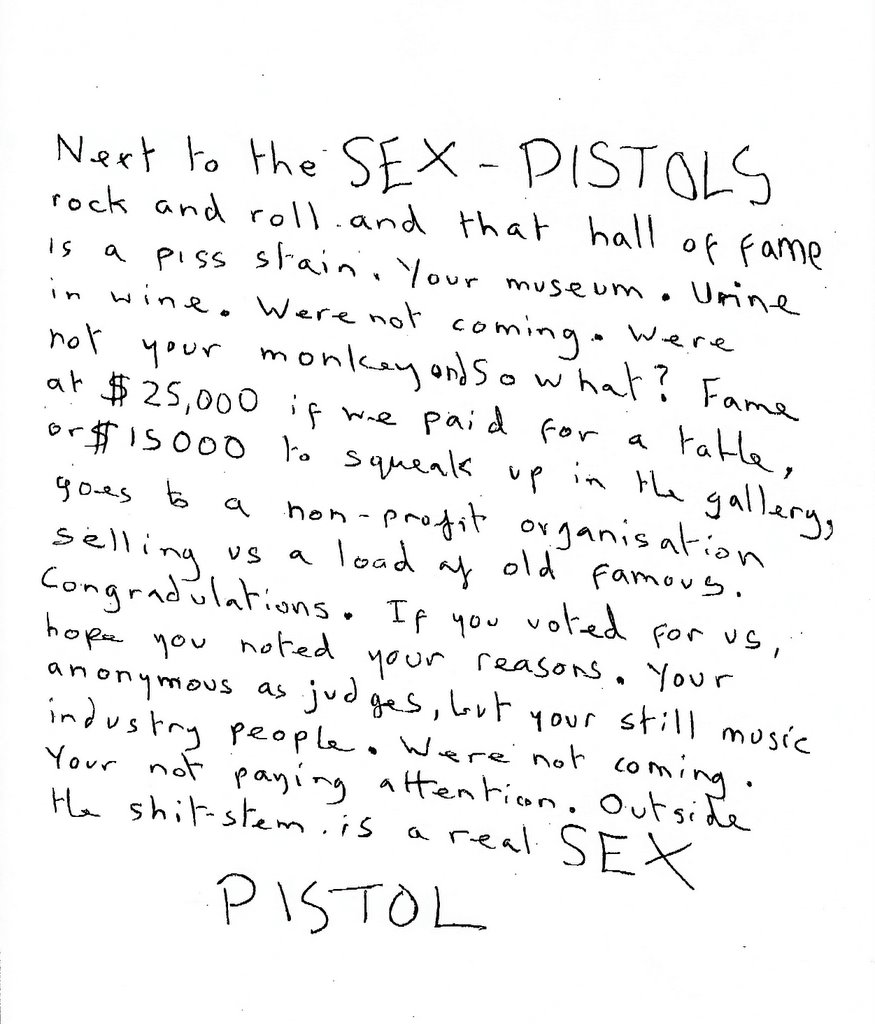
The 'official' response from Sex Pistols.
Ariticle from Pitchfork.
http://pitchforkmedia.com/news/06-03/01.shtml#sexpistols
from the New Yorker
A MEMO FROM THE VATICAN
From: His Holiness
To: All seminaries
Subject: While the Church approves of ordaining “transitory” homosexuals—that is, those men willing to take subways and buses rather than taxis—according to our most recent directive we “cannot admit to the priesthood those who practice homosexuality, present deeply rooted homosexual tendencies, or support the so-called ‘gay culture.’ ”
The following questionnaire should be used to help identify and root out such truly committed homosexuals.
1. Jesus would have been a bad boyfriend because:
(a) He wasn’t gay or sexual in any way, so the question is disgusting.
(b) He would have cared about everyone, but not enough about you.
(c) He wasn’t really Jewish.
2. Priests traditionally wear black with a white collar because:
(a) The attire is simple and modest.
(b) It’s slimming.
(c) The matching quilted shoulder bag is what really makes the whole thing work.
3. Priests take a vow of poverty because:
(a) It’s selfless and humbling.
(b) It’s handy when the check comes.
(c) It makes their apartments feel larger.
4. Should Kate Moss be allowed to take Communion?
5. If there were a Fox series set in the Vatican, it should star:
(a) Wilfred Brimley, as a wise, compassionate Pontiff.
(b) Jennifer Love Hewitt, as a lovely and devout young nun who can talk to martyrs.
(c) Me and Heath. Period.
6. If you found yourself attracted to another priest, you would:
(a) Ask him to pray with you to battle the sinful urge, over drinks.
(b) Banish all such thoughts from your mind until you lose fifteen pounds.
(c) Ask him, “What’s black and white and wants your number?”
7. When you were watching “The Passion of the Christ,” did you ever think, It’s deeply moving and profoundly important, but it’s not “Chicago”?
The rest is over here...
http://www.newyorker.com/shouts/
From: His Holiness
To: All seminaries
Subject: While the Church approves of ordaining “transitory” homosexuals—that is, those men willing to take subways and buses rather than taxis—according to our most recent directive we “cannot admit to the priesthood those who practice homosexuality, present deeply rooted homosexual tendencies, or support the so-called ‘gay culture.’ ”
The following questionnaire should be used to help identify and root out such truly committed homosexuals.
1. Jesus would have been a bad boyfriend because:
(a) He wasn’t gay or sexual in any way, so the question is disgusting.
(b) He would have cared about everyone, but not enough about you.
(c) He wasn’t really Jewish.
2. Priests traditionally wear black with a white collar because:
(a) The attire is simple and modest.
(b) It’s slimming.
(c) The matching quilted shoulder bag is what really makes the whole thing work.
3. Priests take a vow of poverty because:
(a) It’s selfless and humbling.
(b) It’s handy when the check comes.
(c) It makes their apartments feel larger.
4. Should Kate Moss be allowed to take Communion?
5. If there were a Fox series set in the Vatican, it should star:
(a) Wilfred Brimley, as a wise, compassionate Pontiff.
(b) Jennifer Love Hewitt, as a lovely and devout young nun who can talk to martyrs.
(c) Me and Heath. Period.
6. If you found yourself attracted to another priest, you would:
(a) Ask him to pray with you to battle the sinful urge, over drinks.
(b) Banish all such thoughts from your mind until you lose fifteen pounds.
(c) Ask him, “What’s black and white and wants your number?”
7. When you were watching “The Passion of the Christ,” did you ever think, It’s deeply moving and profoundly important, but it’s not “Chicago”?
The rest is over here...
http://www.newyorker.com/shouts/
Tuesday, February 28, 2006

Many thanks to Red State Librarian for bringing this novel to my attention. In spite of the cute title this is a richly detailed, nuanced story of the Vietnam experience of Army linguists that is humorous, heartwarming, and sad. The author, Richard Galli, is a former Vietnamese linguist that served around Hue,working with Vietnamese and Montagnards helping them to increase rice production and grow peanuts and watermelons. Seriously. Galli, in a powerful afterward, writes that it took him over thirty years for his frustration and anger to subside in order to control his cynicism about his experiences and tell the story he felt best captured what he wanted to say. I started reading this yesterday and except for a visit to doctor's office did not put it down until I finished it.
As a former Army linguist, albeit one that was not under imminent threat of death from all sides at all times, I can say that that it was at times a surreal job in an absurd atmosphere and that having a sense of humor and the support of comrades, like Red State and Pho and others, were the best ways of dealing with being a stranger in a strange land without going nuts. Or becoming a raging alcoholic. Okay, maybe not the latter and the jury is probably still out on the former.
This book doesn't just stand out because I can relate to it personally. It is a moving portrait of people that actually wanted to help and thought that they could make a difference. A study in the loss of innocence and naivete. I think this book holds up well with some of the other Vietnam tales: Tim O'Brien The Things They Carried, Stephen Wright's under-appreciated Meditations in Green, James Crumley's One to Count Cadence, and the short stories of Thom Jones to mention only a few. Did I mention that it is also very funny?
Friday, February 24, 2006
Three from "180 More"
Mrs. Darwin
7 April 1852
Went to the Zoo.
I Said to Him-
Something about that Chimpanzee over there
reminds me of you.
Carol Ann Duffy
An Apology
Forgive me
for backing over
and smashing
your red wheelbarrow.
It was raining
and the rear wiper
does not work on
my new plum-colored SUV.
I am also sorry
about the white
chickens.
F.J. Bergmann
Knowledge
My philosopher friend is explaining again
that the bottle of well-chilled beer in my hand
might not be a bottle of beer,
that the trickle of bottle-sweat cooling in my palm
might not be wet, might not be cool,
that in fact it’s impossible ever to know
if I’m holding a bottle at all.
I try to follow his logic, flipping the steaks
that are almost certainly hissing
over the bed of coals – coals I’d swear
were black at first, then gray, then red –
coals we could spread out and walk on
and why not, I ask, since we’ll never be sure
if our feet burn, if our soles
blister and peel, if our faithlessness
is any better or worse a tool
than the firewalker’s can-do extreme.
Exactly, he smiles. Behind the fence
the moon rises, or seems to.
Have another. Whatever else is true,
the coals feel hotter than ever
as the darkness begins to do
what darkness does. Another what? I ask.
Philip Memmer
All of these are from the volume 180 More: Extraordinary Poems for Everyday Life selected by Billy Collins for his project of having a poem a day read with the morning announcements in schools. While some of those included I don't think would pass many a board of ed. scrutiny due to their overt sexuality and ribaldness that would cause some parents to revolt there are some excellent and amusing ones. The online archive of poems is available at link below. Many of the poems in second book are not included on the website although some are.
http://www.loc.gov/poetry/180/p180-list.html
7 April 1852
Went to the Zoo.
I Said to Him-
Something about that Chimpanzee over there
reminds me of you.
Carol Ann Duffy
An Apology
Forgive me
for backing over
and smashing
your red wheelbarrow.
It was raining
and the rear wiper
does not work on
my new plum-colored SUV.
I am also sorry
about the white
chickens.
F.J. Bergmann
Knowledge
My philosopher friend is explaining again
that the bottle of well-chilled beer in my hand
might not be a bottle of beer,
that the trickle of bottle-sweat cooling in my palm
might not be wet, might not be cool,
that in fact it’s impossible ever to know
if I’m holding a bottle at all.
I try to follow his logic, flipping the steaks
that are almost certainly hissing
over the bed of coals – coals I’d swear
were black at first, then gray, then red –
coals we could spread out and walk on
and why not, I ask, since we’ll never be sure
if our feet burn, if our soles
blister and peel, if our faithlessness
is any better or worse a tool
than the firewalker’s can-do extreme.
Exactly, he smiles. Behind the fence
the moon rises, or seems to.
Have another. Whatever else is true,
the coals feel hotter than ever
as the darkness begins to do
what darkness does. Another what? I ask.
Philip Memmer
All of these are from the volume 180 More: Extraordinary Poems for Everyday Life selected by Billy Collins for his project of having a poem a day read with the morning announcements in schools. While some of those included I don't think would pass many a board of ed. scrutiny due to their overt sexuality and ribaldness that would cause some parents to revolt there are some excellent and amusing ones. The online archive of poems is available at link below. Many of the poems in second book are not included on the website although some are.
http://www.loc.gov/poetry/180/p180-list.html
Wednesday, February 22, 2006
Brooklyn Is

I was going to post a few poems etc... but I started reading a brief treatise on Brooklyn by James Agee, Brooklyn Is, and could not put it down. I found this perusing the new book shelf at the library and it caught my eye because the introduction was by the writer Jonathan Lethem of Motherless Brooklyn fame. I have never read anything by James Agee as far as I can recall. He is one of those writers whose name I recognize but could not put a book to. I am suspicous of little volumes published of late as it seems a design by the publisher to grab a quick buck. (This fifty page hardcover retails for $16.95). But as I thumbed through introduction I was hooked. Lethem starts thusly:
"I want to try and sing back James Agee's astonishing song of Brooklyn, this astonishing secret text which like the heart of the borough itself throbs in raw shambolic splendor, never completely discovered, impossible to mistake... He writes as though drunk on matters of space and geometry and distance, always seeing the life of the city whole and in microscopic miniature at once, and persistently smashing together architechure and emotion, conveying in the grain of 'scornful cornice' or a 'blasted mansion' or a 'half-made park with the odd pubescent nudity of all new public efforts' or 'drawn breathing shades' or an 'asphaltic shingle' (his neologism suggesting 'asthmatic,' 'exalted,' 'sephardic.' and who knows what else) his sense that the archipelago of islands settled by the mad invaders of this continent and the refugees who followed, and the nature of the buildings, and the streets, and the signs the arrivistes constructed everywhere upon these New York islands, are in evert way implicated in the experience of any given life lived even temporarily within their bounds, including his own."
Hagiography, idolatry, and Lethem's own strong prose aside it still does not prepare one for the seductive power of Agee's own words. I felt as if I should be reading this book aloud, singing like Brooklynite Walt Whitman, but I have been warned about doing that in public before. This slim tome encompasses a semester of instruction in prose in less than fifty pages. As has been said before there may not be prose in poetry but there will be those whose prose is poetic.
Monday, February 20, 2006
 Frans Snyders .Market Scene on a Quay, about 1635
 This week's New Yorker in the "Shouts and Murmurs" section has a piece by David Sedaris on art collecting. Sort of.
A family of experts.
by David Sedaris
"Before it was moved out near the fairgrounds, the North Carolina Museum of Art was located in downtown Raleigh, and often, when we were young, my sister Gretchen and I would cut out of church and spend an hour looking at the paintings. The collection was not magnificent, but it was enough to give you a general overview, and to remind you that you pretty much sucked."
The rest is continued here.

I can not recommend going to to see New York Doll enough. Thanks to the commentator that suggested the rockumentary film series. The movie will be playing here in town through Wednesday and I think it will also be on DVD fairly soon. While the film has some flaws its strengths far outweigh the negatives. I was never a big NY Dolls fan considering they broke up when I was around 7 but did I listen to some of their things and some of Johnny Thunder's post-Dolls projects and the Dolls influence on many bands in the '80s is undisputed. I don't want to spoil anything so if you want more info click on the poster. But you are better off seeing it cold.
We watched this film before going to see Wilco front man, Jeff Tweedy. It was an awesome solo set with some encore assistance from the band's drummer, Glen Kotche, who also opened up with a solo set. While Kotche is obviously talented (his set sounded like a cross between Mike Oldfield and Olatunji) and was interesting for about 15 minutes, I started feeling like it would have made a nice soundtrack instead of a stand alone thing. The Tweedy show was incredible and I hope this shows up on the internet sites for download sometime soon. As always his crowd banter was amusing and he played songs from full spectrum Uncle Tupelo, Woody Guthrie stuff etc... The crowd was incredibly well behaved probably, as was noted by Tweedy, due to the lack of alcohol available. Still definitely one of the better shows I have seen.
Thursday, February 16, 2006

Rumors of my demise last night were in large part exaggerated. Thanks to K. and Pho I am a new man or at least repaired. I love Rhino Records . They are masters of box sets and reissues. Since the local Sam Goody store is closing I treated myself to the above box set as a birthday present at 30% off. It is a treasure trove of alternative 80's stuff. 82 songs and some good liner notes talking about the battles of who made the cut and why some did not. Named after a 'Mats song and including my faves Husker Du and Pixies I will be rocking out for a while.
Musical tastes are difficult largely formed by outside impressions and then culled to fit one's persona. Was it in High Fidelity where Rob Gordon said you are what you listen to? Parents I suppose are the first impressions either in compliance with or avoidance of. My mom was Elvis all the way in her youth and my dad was old school country like Hank Snow or Sons of the Pioneers. I find I have a greater appreciation for country now and my aversion was probably just an aspect of the larger conflict between father and son. Peers and trends dictated my teens as my collection was ripe with the likes of Boston, Scorpions, Iron Maiden & Pink Floyd's The Wall was probably first album I bought in store after my ordeal with Columbia House finally ended. I eventually gravitated towards Adam & the Ants other pseudo- alternative tunes. It is always interesting to look back on era and see what has survived. I just wish the Misfits song included had been "Where Eagles Dare". I think I will go play it on the jukebox now.
Wednesday, February 15, 2006
38 Years Later
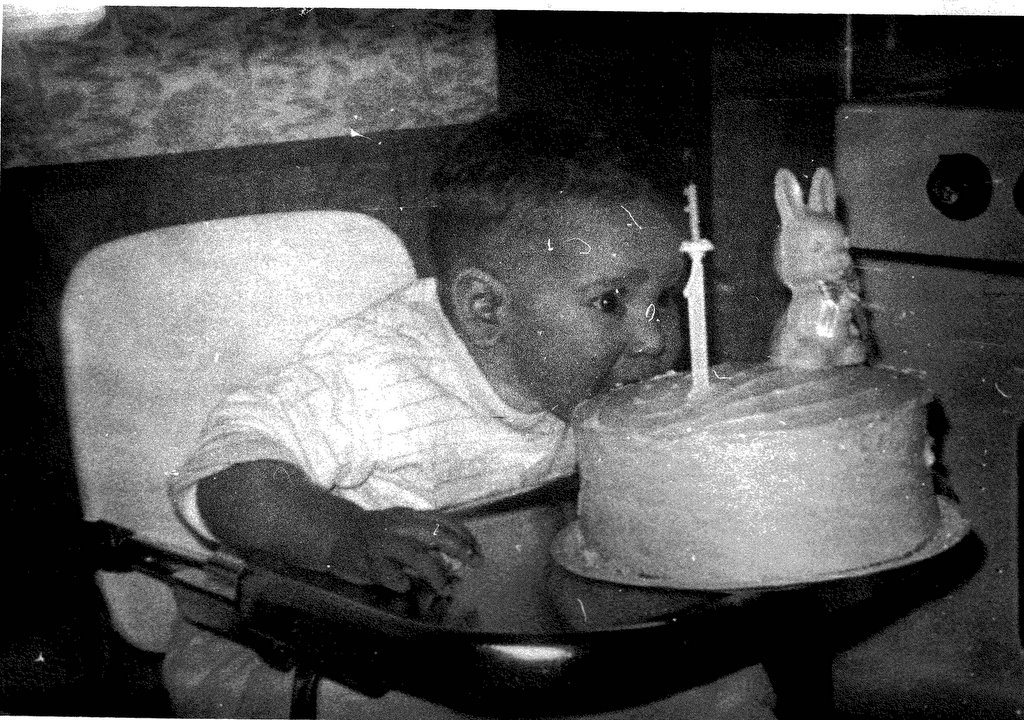
"Reprobate scion of doomed Saxon clans, out of the rainy day surmised. " -
Suttree by Cormac McCarthy
Since having a blog is the internet equivalent of sporting a goatee, I might as well use the space for a big Happy Birthday To Me. This poorly scanned image of myself is from a family photo album my sister, Beth, put together and mailed to me while I was far away from home in the Army. It was the best gift I could have received. It also included a running commentray of post-it notes which were pretty funny. A mug shot of my father in a dark suit said something along the lines of "Dad (after the trial)". ( I guess you had to be there.) In lieu of flowers, pints will be accepted at the Dublin Underground at a to be determind time tonight.
Tuesday, February 14, 2006
Happy St. Valentine's Day

open your heart:
i'll give you a treasure
of tiniest world
a piece of forever with
summitless younger than
angels are mounains
rivery forests
towerful towns(queen
poet king float
sprout heroes of moonstar
flutter to and
swim blossoms of person)through
musical shadows while hunted
by daemons
seethe luminous
leopards(on wingfeet of thingfear)
come ships go
snowily sailing
perfect silence.
Absolute ocean
E. E. Cummings
I found this at library and then ordered it as a gift. E.E. Cummings is one of my favorite creator of love poems. This volume includes the standards since feeling is first and somewhere i have never traveled. It is ostensibly a children's book with the images from the artist Christopher Myers accompanying the poems. While I am not certain the poem may i feel is appropriate for children at least they left out the boys i mean are not refined and i sing of Olaf glad and big. Someone has compiled an extensive no-frills archive of many of his poems here.
Monday, February 13, 2006
A Contribution to Statistics
Out of a hundred people
those who always know better
-- fifty-two
doubting every step
-- nearly all the rest,
glad to lend a hand
if it doesn't take too long
-- as high as forty-nine,
always good
because they can't be otherwise
-- four, well maybe five,
able to admire without envy
-- eighteen,
suffering illusions
induced by fleeting youth
-- sixty, give or take a few,
not to be taken lightly
-- forty and four,
living in constant fear
of someone or something
-- seventy-seven,
capable of happiness
-- twenty-something tops,
harmless singly, savage in crowds
-- half at least,
cruel
when forced by circumstances
-- better not to know
even ballpark figures,
wise after the fact
-- just a couple more
than wise before it,
taking only things from life
-- thirty
(I wish I were wrong),
hunched in pain,
no flashlight in the dark
-- eighty-three
sooner or later,
righteous
-- thirty-five, which is a lot,
righteous
and understanding
-- three,
worthy of compassion
-- ninety-nine,
mortal
-- a hundred out of a hundred.
Thus far this figure still remains unchanged.
~ Wislawa Szymborska ~
Ah, middle age. I was a little woozy after going to Mercy today for endoscopy this morning. Although thanks to anathesia I can't recall the actual procedure but my sore throat does not feel as if the camera was the 'pill-sized' object described prior to procdedure. It seems as if a hital hernia was responsible for food becoming lodged in throat. I have to admit though since taking pills and watching the late night eating habits I have not had the need to pop antacid tablets like pez. Follow up in two weeks.
So while laying about on the couch and between naps I started reading the latest collection of poems from Polish Nobel laureate Szmborska, Monlogue of a Dog. A very slim volume of poetry inflated a bit by its being a dual-language edition with Polish versions of poems on facing pages. Her poems, like the one above , occaisonally show up in New Yorker. Billy Collins writes the introduction and notes that it was frequently the poets of Europe that Americans turned to post 9/11. This volume is a good albeit brief introduction to her work and I also recommend her collection of essays, Nonrequired Reading. (Which I managed to find remaindered at Prairie Lights, might still be some left.)
Finished reading A Tender Bar and enjoyed it. (Although part of me will never feel totally sympathetic to a Yale grad. Envy? Perhaps.) It was a poignantly written memoir about growing up and what it means to become a man without a father and the search for paternal role models.
Tried to start reading another memoir, Time was Soft There, A Paris Sojourn at Shakespeare & Co but due to proximity and or similarity of previous book. I was a bit put off by the narrator. Particularly when he refers to his book thusly in the preface, "...liquid truth....events have been distilled and condensed and then distilled again." While I do admire the disclosure, I think I will wait on this book for a while. Maybe read Sylvia Beach's book or A Moveable Feast again.
So I moved onto another memoir...Jacques Pepin's The Apprentice: My Life in the Kitchen. I love the stories of him growing up and the associations of simple dishes that his mother made that still burn strong after sixty years. There are several recipes included and little bon mots like the fact that Kaye was not only a close friend but one of the finest cooks Pepin had ever known, Chinese being Kaye's speciality. This will bide me over until I decide to shell out for a copy Larousse Gastronomique. Bon Appetit.
those who always know better
-- fifty-two
doubting every step
-- nearly all the rest,
glad to lend a hand
if it doesn't take too long
-- as high as forty-nine,
always good
because they can't be otherwise
-- four, well maybe five,
able to admire without envy
-- eighteen,
suffering illusions
induced by fleeting youth
-- sixty, give or take a few,
not to be taken lightly
-- forty and four,
living in constant fear
of someone or something
-- seventy-seven,
capable of happiness
-- twenty-something tops,
harmless singly, savage in crowds
-- half at least,
cruel
when forced by circumstances
-- better not to know
even ballpark figures,
wise after the fact
-- just a couple more
than wise before it,
taking only things from life
-- thirty
(I wish I were wrong),
hunched in pain,
no flashlight in the dark
-- eighty-three
sooner or later,
righteous
-- thirty-five, which is a lot,
righteous
and understanding
-- three,
worthy of compassion
-- ninety-nine,
mortal
-- a hundred out of a hundred.
Thus far this figure still remains unchanged.
~ Wislawa Szymborska ~
Ah, middle age. I was a little woozy after going to Mercy today for endoscopy this morning. Although thanks to anathesia I can't recall the actual procedure but my sore throat does not feel as if the camera was the 'pill-sized' object described prior to procdedure. It seems as if a hital hernia was responsible for food becoming lodged in throat. I have to admit though since taking pills and watching the late night eating habits I have not had the need to pop antacid tablets like pez. Follow up in two weeks.
So while laying about on the couch and between naps I started reading the latest collection of poems from Polish Nobel laureate Szmborska, Monlogue of a Dog. A very slim volume of poetry inflated a bit by its being a dual-language edition with Polish versions of poems on facing pages. Her poems, like the one above , occaisonally show up in New Yorker. Billy Collins writes the introduction and notes that it was frequently the poets of Europe that Americans turned to post 9/11. This volume is a good albeit brief introduction to her work and I also recommend her collection of essays, Nonrequired Reading. (Which I managed to find remaindered at Prairie Lights, might still be some left.)
Finished reading A Tender Bar and enjoyed it. (Although part of me will never feel totally sympathetic to a Yale grad. Envy? Perhaps.) It was a poignantly written memoir about growing up and what it means to become a man without a father and the search for paternal role models.
Tried to start reading another memoir, Time was Soft There, A Paris Sojourn at Shakespeare & Co but due to proximity and or similarity of previous book. I was a bit put off by the narrator. Particularly when he refers to his book thusly in the preface, "...liquid truth....events have been distilled and condensed and then distilled again." While I do admire the disclosure, I think I will wait on this book for a while. Maybe read Sylvia Beach's book or A Moveable Feast again.
So I moved onto another memoir...Jacques Pepin's The Apprentice: My Life in the Kitchen. I love the stories of him growing up and the associations of simple dishes that his mother made that still burn strong after sixty years. There are several recipes included and little bon mots like the fact that Kaye was not only a close friend but one of the finest cooks Pepin had ever known, Chinese being Kaye's speciality. This will bide me over until I decide to shell out for a copy Larousse Gastronomique. Bon Appetit.
Friday, February 10, 2006
Thursday, February 09, 2006
Nicknames or Never send a Ferret to do a Weasel's job
"I listened to the conversations of the men, my head whipping back and forth as though I were watching four tennis matches at once. Reading between the lines I gathered that they all worked at Dickens, as bartenders and cooks and bouncers, and therefore Steve was The Boss. They revered Steve. When speaking of him they sounded less like employees than apostles. It wasn't always clear they were speaking about Steve, however, because he had a number of nicknames, including Chief and Rio and Feinblatt. Each of the men also went by a nickname Steve had bestowed, except Uncle Charlie, who had two- Chas and Goose. After ten minutes I was juggling so many nicknames that I felt as if there were a dozen men in the car instead of the four I counted. The men confused me further by rattling off a list of other nicknames, people who stopped into Dickens the night before, like Sooty and Sledge and Rifleman and Skeezix and Tank and Fuckembabe."
Reading Tender Bar the other day I came upon the above excerpt and it reminded me of college. When I first arrived at UConn in fall of '90 I applied for a workstudy job in the VA office on campus which was sort of a part of the Student Affairs Office. One of the guys that worked there and eventually took over the office was Joe. Like Steve in the above story he had a dizzying array of friends, coworkers and ex-Army Ranger buddies all with nicknames bestowed upon them for various reasons. Eventually everyone who worked in the office (including El Duderino) had a nickname. Joe also had friends like Preacher, Ferret, and Lurch; whose personal creed I will never forgot; "After two flushes, it's managements problem."
Later I also started working for Joe when he was an Asst. Hall Director and I was an RA. Another pile of nicknames followed, Small Change, Blaze, and Doolittle. (I was under the impression that this was her last name until it was revealed that it was a reference to her somewhat untamed hair).
Still later Joe went to law school in Vermont and we visited several times to meet future district attorneys and corporate lawyers with monikers such as Coolio, Dangerous D, and Pan the Man. I know I am forgetting many other names but it was to a point where I knew some of these people for five or six years before I learned their actual first name. I recall running into Lurch in Cancun in one of those random encounters far from home and trying to introduce him to someone and struggling to remember that his name was Tim. Good times.
Reading Tender Bar the other day I came upon the above excerpt and it reminded me of college. When I first arrived at UConn in fall of '90 I applied for a workstudy job in the VA office on campus which was sort of a part of the Student Affairs Office. One of the guys that worked there and eventually took over the office was Joe. Like Steve in the above story he had a dizzying array of friends, coworkers and ex-Army Ranger buddies all with nicknames bestowed upon them for various reasons. Eventually everyone who worked in the office (including El Duderino) had a nickname. Joe also had friends like Preacher, Ferret, and Lurch; whose personal creed I will never forgot; "After two flushes, it's managements problem."
Later I also started working for Joe when he was an Asst. Hall Director and I was an RA. Another pile of nicknames followed, Small Change, Blaze, and Doolittle. (I was under the impression that this was her last name until it was revealed that it was a reference to her somewhat untamed hair).
Still later Joe went to law school in Vermont and we visited several times to meet future district attorneys and corporate lawyers with monikers such as Coolio, Dangerous D, and Pan the Man. I know I am forgetting many other names but it was to a point where I knew some of these people for five or six years before I learned their actual first name. I recall running into Lurch in Cancun in one of those random encounters far from home and trying to introduce him to someone and struggling to remember that his name was Tim. Good times.
Wednesday, February 08, 2006
Tuesday, February 07, 2006
The Realm of the Aesthetic
Apologies for the length. I mostly wanted to capture this in case it is unavailble online in the future. The poems Harold Bloom refers to are from a volume of poetry for which this essay was written as an introduction, The Best of the Best of American Poetry. Bloom's philosophy of art and literature is one that I admire . I also appreciate the criticism of Micheal Dirda, whom K. has heard me praise way too often. More on him tomorrow.
They have the numbers; we, the heights
Harold Bloom
My title is from Thucydides and is spoken by the Spartan commander at Thermopylae. Culturally, we are at Thermopylae: the multiculturalists, the hordes of camp- followers afflicted by the French diseases, the mock-feminists, the commissars, the gender-and-power freaks, the hosts of new historicists and old materialists--all stand below us. They will surge up and we may be overcome; our universities are already travesties, and our journalists parody our professors of "cultural studies." For just a little while longer, we hold the heights, the realm of the aesthetic. There are still authentic poems being written in the United States. Elizabeth Bishop, May Swenson, and James Merrill are gone, but two great poets remain in John Ashbery and A. R. Ammons, and there are a score of contemporaries almost of their eminence. This anthology cannot assert that it contains all of the best poets and poems of the last decade. My charge was to select seventy-five poems out of seven hundred and fifty, and not to look outside of the volumes of this series. There is thus nothing here by Edgar Bowers in an older generation or by Henri Cole in the middle one, to mention just two poets whom I greatly admire. Nor would I suggest that all seventy-five poems I have chosen are going to be permanent achievements; I have made a heap of all the best I could find, where I was instructed to search. Nevertheless, there are poems here that should be perpetuated for future generations. These pass my personal test for the canonical: I have reread them with pleasure and with profit.
One of the ten volumes is not represented at all; I failed to discover more than an authentic poem or two in it. The series editor, David Lehman, kindly suggested some possibilities, but the poets involved had done better work elsewhere in these volumes. That 1996 anthology is one of the provocations for this essay, since it seems to me a monumental representation of the enemies of the aesthetic who are in the act of overwhelming us. It is of a badness not to be believed, because it follows the criteria now operative: what matters most are the race, gender, sexual orientation, ethnic origin, and political purpose of the would-be poet. I ardently wish I were being hyperbolical, but in fact I am exercising restraint, very difficult for a lifelong aesthete at the age of sixty-seven. One cannot expect every attempt at poetry to rival Chaucer and Shakespeare, Milton and Wordsworth, Whitman and Dickinson, Wallace Stevens and Hart Crane. But those poets, and their peers, set the measure: any who aspire to poetry must keep such exemplars always in mind. Sincerity, as the divine Oscar Wilde assured us, is not nearly enough to generate a poem. Bursting with sincerity, the 1996 volume is a Stuffed Owl of bad verse, and of much badness that is neither verse nor prose.
How could this have happened? The last thirty years of intellectual decline provide the answer: cultural guilt. Enthusiastic young men and women (and some of their middle-aged gurus) rushed forth in a Great Awakening of Rock Religion in the closing years of the 1960s. Their immediate provocation was the obscene American slaughter of the Vietnamese, but the Saturnalia that reigned for a few years, from Tokyo to Paris, quickly transcended the occasion. The epiphenomenon of the Revival went by soon enough, but it was clear to discerning spirits in 1968-70 that the consequences, though minimal for our capitalist society's ruling powers, would be endless for any cognitive and aesthetic activities throughout the Western world. Robber barons, in all countries, were immune from the contamination of the New Enthusiasm. Nothing has changed, except perhaps for the worse, in our political and economic life. The true legatees of the mock-Revolution were Ronald Reagan and now his parody, Bill Clinton. The change, all but catastrophic, instead afflicted our intellectual, cultural, educational, and aesthetic spheres, in a kind of Creation-Fall. Robert Hughes has termed what was born "the Culture of Complaint," whose hucksters--academic, journalistic, pseudo-artistic--I've named "the School of Resentment," a rabblement of lemmings leaping off the cliffs into the waters of oblivion.
Perhaps none of this matters, since good poems continue to be written, printed, and sometimes even read (whether well or not, few seem to care). Yet it will matter to some young people, as once it did, when we went to the poets to make our souls, as Yeats said. My mind was formed by Blake and Hart Crane, and then by Wallace Stevens and Shelley. The uses of great poetry are manifold, provided that an educated readership survives. Criticism, both academic and journalistic (a distinction that now scarcely exists), is dying, mostly because the universities have replaced literary criticism by "cultural criticism," a would-be social science. To survive, criticism would have to move outside the academy, but it certainly can find no home in the media. If what Walter Pater called "Aesthetic criticism" dies, then what he termed "Aesthetic poetry" must in time die also, since we will cease to know good from bad poetry. By "Aesthetic" in regard both to poetry and to criticism, Pater simply meant "authentic" or "good", since he kept in mind always the Greek meaning of aesthesis: "perceptiveness." If we lose all sense of the aesthetic, then we scarcely will see the difference between Emily Dickinson and Ella Wheeler Wilcox, or between John Ashbery and his weaker imitators.
Scolding the universities, or the media, is useless: enormous social pressures--that do not affect the people in general, or the Republican Congress and not very Democratic president the people elected--have been loosed upon institutions hopelessly vulnerable to cultural guilt. Every variety of "studies" at last will be housed: if sexual orientation is to be placed with race, ethnic group, and gender as sources of aesthetic and cognitive values, then why should we not have "Sado-Masochistic Studies," in particular honor of the god of resentment, the late Michel Foucault? If there is a Homosexual Poetic, then why not a Poetics of Pain? If representation-by-category is to be the law of the universities, and of all those they influence, what "minority" is to be excluded? Shakespeare and Dante were European males; is that worth remarking? William Wordsworth invented modern poetry. I do not know whether the more than fifty poets I anthologize all have read Wordsworth, but if they haven't, they have anyway, since all but a few write Wordsworthian poetry, in the broad sense. Even where they have ostensible subjects, almost all of the poems in this volume manifest Hazlitt's characterization of Wordsworth's work:
He takes a subject or a story merely as pegs or loops to hang thought and feeling on; the incidents are trifling, in proportion to his contempt for imposing appearances; the reflections are profound, according to the gravity and aspiring pretensions of the mind.
Hazlitt's personal ambivalence toward Wordsworth is palpable, but so is the critic's realization that Wordsworth reinvented poetry. Yet nearly all current published criticism of Wordsworth and almost any class taught on him at our universities and colleges now actively condemn this greatest of all modern poets on political grounds, because he "betrayed" his early allegiance to the French Revolution! By our means test, Wordsworth cannot pass. So absurd have the professors become that I can see no way to salvage literary study except to abolish tenure. Tenure is an archaic survival anyway, but it becomes pernicious when faculties are crowded by thousands of ideologues, who resent Wordsworth even as they resent Shakespeare. When I was a young teacher of poetry at Yale, the English Romantic poets were Wordsworth, Coleridge, Byron, and Keats, as well as Blake and Shelley, whose place in the canon I helped restore. On hundreds of campuses now, these poets have to share attention with the "women Romantic poets": Felicia Hemans, Laetitia Landon, Charlotte Smith, and Mary Tighe, among some others. These were, to understate, justly neglected verse writers, though superior to many in The Best American Poetry 1996. Anthologies of seventeenth-century English literature now give us, side by side with Donne, Ben Johnson, and Milton, a group including the Duchess of Newcastle, Lady Mary Chudleigh, Anne Killigrew, and the venerated Aphra Behn. I have seen my profession dying for over a quarter century now, and in another decade it may be dead. If its function is to appreciate and teach Laetitia Landon and Lady Mary Chudleigh, then the demise cannot come too soon.
One asks again: How could this have happened, and not just in the universities but in the publishing world and in the media? The New York Times essentially is now a countercultural newspaper. When Maya Angelou read a poem for Clinton's first inauguration, the Times printed the text, a monument of sincerity, and in an editorial praised this effusion for its "Whitmanian amplitudes." Recently, one of the Times rock critics proclaimed our contemporary Mozart to be the glyph formerly known as Prince. Literary satire is impossible when the Times exceeds Nathaniel West and Terry Southern in outrageousness. If all aesthetic and cognitive standards are abandoned by professors and journalists alike, then the tradition of American poetry can survive only by a profound inward turning.
Walt Whitman was not only the strongest of our poets (together with the highly antithetical Emily Dickinson), but he is also now the most betrayed of all our poets, with so much of the ongoing ideological balderdash being preached in his name. Whitman's poetry generally does the opposite of what he proclaims its work to be: it is reclusive, evasive, hermetic, nuanced, and more onanistic even than homoerotic, which critics cannot accept, particularly these days when attempts are made to assimilate the Self-Reliant Whitman into what calls itself the Homosexual Poetic. If we are to have gay and lesbian studies, who will speak for Onan, whose bards include Whitman and the Goethe of Faust, Part Two? The most figurative of all our poets, Whitman eludes every effort to entrap him in an ideology. As elitist a democrat as his master Emerson, Whitman continues with his ideas of representation to outwit his historicizing and eroticizing critics. The crucial figure in Whitman is neither his self--Walt Whitman, one of the roughs, an American--nor his soul, but "the real me" or "me myself," a conceptual image that prophesies Wallace Stevens, T. S. Eliot, and particularly John Ashbery:
Apart from the pulling and hauling stands what I am,
Stands amused, complacent compassionating, idle, unitary,
Looks down, is erect, bends an arm on an impalpable certain rest,
Looks with its sidecurved head curious what will come next,
Both in and out of the game, and watching and wondering at it.
That Whitmanian "what I am," his "real me" or "me myself," is both an inspiration to strong American poetry after him and a reproach to the cultural and erotic dogmas now circulated in his great name. It is no accident that the best American poets who have emerged from Whitman--sometimes insisting that they owed him nothing--are formalists, major artists of verse: Stevens, Eliot, Hart Crane, and even Ashbery when at his most gravely traditional. Cast out the aesthetic, and you cast away Whitman, who was a major poet and a poor prophet, and who was, above all else, a very difficult poet, whose synecdoches do not unravel without very frequent rereadings. Authentic American poetry is necessarily difficult; it is our elitist art, though that elite has nothing to do with social class, gender, erotic preference, ethnic strain, race, or sect. "We live in the mind," Stevens said, and our poetry always is either Emersonian or anti-Emersonian, but either way is informed by Emerson's dialectics of power:
Life will be imaged, but cannot be divided nor doubled. Any invasion of its unity would be chaos. The soul is not twin-born, but the only begotten, and though revealing itself as child in time, child in appearance, is of a fatal and universal power, admitting no co-life. Every day, every act betrays the ill-concealed deity. We believe in ourselves, as we do not believe in others. We permit all things to ourselves, and that which we call sin in others, is experiment for us. It is an instance of our faith in ourselves, that men never speak of crime as lightly as they think: or, every man thinks a latitude safe for himself, which is nowise to be indulged to another. The act looks very differently on the inside, and on the outside; in its quality, and its consequences. Murder in the murderer is no such ruinous thought as poets and romancers will have it; it does not unsettle him, or fright him from his ordinary notice of trifles: it is an act quite easy to be contemplated, but in its sequel, it turns out to be a horrible jangle and confounding all relations. Especially the crimes that spring from love, seem right and fair from the actor's point of view, but, when acted, are found destructive of society. No man at last believes that he can be lost, nor that the crime in him is as black as in the felon. Because the intellect qualifies in our own case the moral judgments. For there is no crime to the intellect. That is antinomian or hypernomian, and judges law as well as fact.
That does not allow any room for the false generosity of any Affirmative Action in the judging of poetry. Printing, praising, and teaching bad poems for the sake of even the best causes is simply destructive for those causes. "We believe in ourselves, as we do not believe in others" is a truth that makes us wince, but no one ever can write a good poem without it. Tony Kushner, who could be a greater playwright but for his obsession with the ideologies of political correctness, ought to ponder Emerson's "Experience," from which I have just quoted. Every attempt to socialize writing and reading fails; poetry is a solitary art, more now than ever, and its proper audience is the deeply educated, solitary reader, or that reader's sitting within herself in a theater.
It was inevitable that the School of Resentment would do its destructive damage to the reading, staging, and interpretation of Shakespeare, whose eminence is the ultimate demonstration of the autonomy of the aesthetic. Cultural poeticians, ostensible feminists, sub-Marxists, and assorted would-be Parisians have given us French Shakespeare, who never wrote a line but instead sat in a tavern while all the "social energies" of early modern Europe pulsated into his quill and created Hamlet, Falstaff, Iago, and Cleopatra, with little aid from that mere funnel, the Man from Stratford. It has not been explained (at least to me) just why the social energies favored Shakespeare over Thomas Middleton or John Marston or George Chapman or whoever, but this remarkable notion totally dominates today's academic study of Shakespeare. First, Paris told us that language did the thinking and writing for us, but then Foucault emerged, and Shakespeare went from being language's serf to society's minion. No longer can we speak of the best writer--Auden's Top Bard--and if Shakespeare recedes, why call a volume The Best American Poetry? Certainly the 1996 volume should have been retitled The Most Socially Energetic American Poetry, and if I were not Bloom Brontosaurus, an amiable dinosaur, we could have called this book The Most Socially Energetic of the Socially Energetic. The madness that contaminates our once high culture cannot be cured unless and until we surrender our more than Kafkan sense that social guilt is not to be doubted. No thing can be more malignant than a disease of the spirit that sincerely regards itself as virtue.
Shakespeare, precisely because he is the only authentic multicultural writer, demonstrated that our modish multiculturalism is a lie, a mask for mediocrity and for the thought-control academic police, the Gestapo of our campuses. Each time I make the mistake of glancing at the Yale Weekly Bulletin, I shudder to see that the dean of Yale College has appointed yet another subdean to minister to the supposed cultural interests of another identity club: ethnic, racial, linguistic, with gender and erotic subsets. Shakespeare, performed and read in every country (with the sporadic exception of France, most xenophobic of cultures), is judged by audiences of every race and language to have put them upon the stage. Shakespeare's power has nothing to do with Eurocentrism, maleness, Christianity, or Elizabethan-Jacobean social energies. No one else so combined cognitive strength, originality, dramatic guile, and linguistic florabundance as virtually to reinvent the human, and Shakespeare is therefore the best battlefield upon which to fight the rabblement of Resenters. Our multiculturalists are reductionists; the 1996 volume actually is asserting: "Our bad poets are just as good as your bad poets." Shakespeare, pragmatically the true multiculturalist, is the least reductive of all writers; his men and women never invite us to believe that when we know the worst about them, then we know exactly who they are. Emerson, in Representative Men, caught this best:
Shakespeare is as much out of the category of eminent authors, as he is out of the crowd. He is inconceivably wise; the others, conceivably. A good reader can, in a sort, nestle into Plato's brain, and think from thence, but not into Shakespeare's. We are still out of doors. For executive faculty, for creation, Shakespeare is unique. No man can imagine it better. He was the farthest reach of subtlety compatible with an individual self,--the subtilest of authors, and only just within the possibility of authorship. With this wisdom of life, is the equal endowment of imaginative and of lyric power. He clothed the creatures of his legend with form and sentiments, as if they were people who had lived under his roof; and few real men have left such distinct characters as these fictions. And they spoke in language as sweet as it was fit. Yet his talents never seduced him into an ostentation, nor did he harp on one string. An omnipresent humanity coordinates all his faculties. Give a man of talents a story to tell, and his partiality will presently appear. He has certain observations, opinions, topics, which have some accidental prominence, and which he disposes all to exhibit. He crams this part, and starves that other part, consulting not the fitness of the thing, but his fitness and strength. But Shakespeare has no peculiarity, no importunate topic; but all is duly given; no veins, no curiosities; no cow-painter, no bird-fancier, no mannerist is he: he has no discoverable egotism: the great he tells greatly; the small, subordinately. He is wise without emphasis or assertion; he is strong, as nature is strong, who lifts the land into mountain slopes without effort, and by the same rule as she floats a bubble in the air, and likes as well to do the one as the other. This makes that equality of power in farce, tragedy, narrative, and love-songs; a merit so incessant, that each reader is incredulous of the perception of other readers.
If this be Bardolatry, then let us have more of it, for it may be the only medicine that can cure us of the French blight that afflicts our culture and our academies. It is no accident that poetry is the principal victim of the decline and fall of our literature faculties. Almost no one these days is taught how to read a poem; there are very few who know how to instruct in the difficult art of interpretation, and the going ideologies distrust poetry anyway. How do you politicize this?
All day within the dreamy house,
The doors upon their hinges creak'd;
The blue fly sung in the pane; the mouse
Behind the mouldering wainscot shriek'd,
Or from the crevice peer'd about.
Old faces glimmer'd thro' the doors,
Old footsteps trod the upper floors,
Old voices called her from without.
She only said, "My life is dreary,
He cometh not," she said;
She wept, "I am aweary, aweary,
I would that I were dead!"
The sparrow's chirrup on the roof,
The slow clock ticking, and the sound
Which to the wooing wind aloof
The poplar made, did all confound
Her sense; but most she loathed the hour
When the thick-rooted sunbeam lay
Athwart the chambers, and the day
Was sloping toward his western bower.
Then she said, "I am very dreary,
He will not come," she said;
She wept, "I am aweary, aweary,
O God, that I were dead!"
--------------------------------------------------------------------------------
It is ironical that, in this bad time, American poetry is of a higher quality than our criticism or teaching of poetry. Four major poets who appear in this book--Elizabeth Bishop, James Merrill, Amy Clampitt, and the still undervalued May Swenson--are gone, yet there are poems here by Ashbery, Ammons, and at least a dozen others that I think will endure, if only we can maintain a continuity of aesthetic appreciation and cognitive understanding that more or less prevailed from Emerson until the later 1960s, but that survives only in isolated pockets. While it is true that several of the greatest American poets--Whitman, Dickinson, Stevens, Hart Crane--had either no or little authentic critical response during their lifetimes, they at least did not have to endure a cultural situation fundamentally hostile to aesthetic and cognitive standards of judgment. I marvel at the courage and desperate faith of our best younger poets, who have to withstand the indifference or hostility not just of society in general, but also of the supposed defenders of poetry, who now will advocate it only as an instrument of social change. If you urge political responsibilities upon a poet, then you are asking her to prefer to poetry what can destroy her poem. Emily Dickinson had the inner freedom to rethink everything for herself and so achieved a cognitive originality as absolute as William Blake's. She had economic and social advantages that Walt Whitman did not enjoy, yet like Whitman she did not have to confront ideological persuasions either irrelevant or inimical to aesthetic ambitions. Wallace Stevens could take for granted the autonomy of the aesthetic; how would Harmonium otherwise have been possible, or Hart Crane's first volume, White Buildings? I write this introduction out of the conviction that a literary critic has no political responsibilities, as a critic. My obligation is only to help (if that I can) make it possible for another Elizabeth Bishop or May Swenson or James Merrill to develop without being impeded by ideological demands. I am more than aware that the Resenters speak constantly of "the ideology of the aesthetic" and of "the Romantic ideology," but that is simply a playing with loaded dice. The only pragmatic aesthetic I know is that some poems intrinsically are better than others, while Romanticism, as I apprehend it, is a discipline in sensibility and in perception.
In his essay "Politics," Emerson provides a spark for these times:
It makes no difference how many tons weight of atmosphere presses on our heads, so long as the same pressure resists it within the lungs. Augment the mass a thousand fold; it cannot begin to crush us, as long as reaction is equal to action.
The Resenters prate of power, as they do of race and gender: these are careerist stratagems and have nothing to do with the insulted and injured, whose lives will not be improved by our reading the bad verses of those who assert that they are the oppressed. Our schools as much as our universities are given away to these absurdities; replacing Julius Caesar by The Color Purple is hardly a royal road to enlightenment. A country where television, movies, computers, and Stephen King have replaced reading is already in acute danger of cultural collapse. That danger is dreadfully augmented by our yielding education to the ideologues whose deepest resentment is of poetry itself. What John Hollander remarks of Whitman--"The poetry, like its title, looks easy and proves hard"--is true of almost all great or very good poets. But there, I hope, will be one of the crucial uses for us of the best American poems: more than ever before, our situation needs aesthetic and cognitive difficulty. The mock poetry of Resentment looks easy and proves easy; unlike Whitman, it lacks mind. When I think of the American poets of this century whom I myself love best, I begin always with Wallace Stevens and with Hart Crane. Stevens subtly gives us what be calls "the hum of thoughts evaded in the mind," and Crane urges us to the most difficult transcendence ever visualized by any American poet. Their heirs, including Elizabeth Bishop, Merrill, Ashbery, and Ammons, have carried forward this mingled legacy of thoughts available to us only in poems, and yearnings made palpable only in complex imaginings. Mastery of metaphor and power of thinking are the true merits of the best American poetry of our time. I give the last words here to the sacred Emerson, from his Whitman-inspiring essay "The Poet," where the freedom of poetry is ascribed to "tropes" and to "thought":
The poets are thus liberating gods. The ancient British bards had for the title of their order, "Those who are free throughout the World." They are free, and they make free. An imaginative book renders us much more service at first, by stimulating us through its tropes, than afterward, when we arrive at the precise sense of the author. I think nothing is of any value in books, excepting the transcendental and extraordinary. If a man is inflamed and carried away by his thought, to that degree that he forgets the authors and the public, and heeds only this one dream, which holds him like an insanity, let me read his paper, and you may have all the arguments and histories and criticism. All the value which attaches to Pythagoras, Paracelsus, Cornelius Agrippa, Cardan, Kepler, Swedenborg, Schelling, Oken, or any other who introduces questionable facts into his cosmogony, as angels, devils, magic, astrology, palmistry, mesmerism, and so on, is the certificate we have of departure from routine, and that here is a new witness. That also is the best success in conversation, the magic of liberty, which puts the world, like a ball, in our hands. How cheap even the liberty then seems; how mean to study, when an emotion communicates to the intellect the power to sap and upheave nature: how great the perspective! nations, times, systems, enter and disappear, like threads in tapestry of large figure and many colors; dream delivers us to dream, and while the drunkenness lasts, we will sell our bed, our philosophy, our religion, in our opulence.
from The Boston Review
They have the numbers; we, the heights
Harold Bloom
My title is from Thucydides and is spoken by the Spartan commander at Thermopylae. Culturally, we are at Thermopylae: the multiculturalists, the hordes of camp- followers afflicted by the French diseases, the mock-feminists, the commissars, the gender-and-power freaks, the hosts of new historicists and old materialists--all stand below us. They will surge up and we may be overcome; our universities are already travesties, and our journalists parody our professors of "cultural studies." For just a little while longer, we hold the heights, the realm of the aesthetic. There are still authentic poems being written in the United States. Elizabeth Bishop, May Swenson, and James Merrill are gone, but two great poets remain in John Ashbery and A. R. Ammons, and there are a score of contemporaries almost of their eminence. This anthology cannot assert that it contains all of the best poets and poems of the last decade. My charge was to select seventy-five poems out of seven hundred and fifty, and not to look outside of the volumes of this series. There is thus nothing here by Edgar Bowers in an older generation or by Henri Cole in the middle one, to mention just two poets whom I greatly admire. Nor would I suggest that all seventy-five poems I have chosen are going to be permanent achievements; I have made a heap of all the best I could find, where I was instructed to search. Nevertheless, there are poems here that should be perpetuated for future generations. These pass my personal test for the canonical: I have reread them with pleasure and with profit.
One of the ten volumes is not represented at all; I failed to discover more than an authentic poem or two in it. The series editor, David Lehman, kindly suggested some possibilities, but the poets involved had done better work elsewhere in these volumes. That 1996 anthology is one of the provocations for this essay, since it seems to me a monumental representation of the enemies of the aesthetic who are in the act of overwhelming us. It is of a badness not to be believed, because it follows the criteria now operative: what matters most are the race, gender, sexual orientation, ethnic origin, and political purpose of the would-be poet. I ardently wish I were being hyperbolical, but in fact I am exercising restraint, very difficult for a lifelong aesthete at the age of sixty-seven. One cannot expect every attempt at poetry to rival Chaucer and Shakespeare, Milton and Wordsworth, Whitman and Dickinson, Wallace Stevens and Hart Crane. But those poets, and their peers, set the measure: any who aspire to poetry must keep such exemplars always in mind. Sincerity, as the divine Oscar Wilde assured us, is not nearly enough to generate a poem. Bursting with sincerity, the 1996 volume is a Stuffed Owl of bad verse, and of much badness that is neither verse nor prose.
How could this have happened? The last thirty years of intellectual decline provide the answer: cultural guilt. Enthusiastic young men and women (and some of their middle-aged gurus) rushed forth in a Great Awakening of Rock Religion in the closing years of the 1960s. Their immediate provocation was the obscene American slaughter of the Vietnamese, but the Saturnalia that reigned for a few years, from Tokyo to Paris, quickly transcended the occasion. The epiphenomenon of the Revival went by soon enough, but it was clear to discerning spirits in 1968-70 that the consequences, though minimal for our capitalist society's ruling powers, would be endless for any cognitive and aesthetic activities throughout the Western world. Robber barons, in all countries, were immune from the contamination of the New Enthusiasm. Nothing has changed, except perhaps for the worse, in our political and economic life. The true legatees of the mock-Revolution were Ronald Reagan and now his parody, Bill Clinton. The change, all but catastrophic, instead afflicted our intellectual, cultural, educational, and aesthetic spheres, in a kind of Creation-Fall. Robert Hughes has termed what was born "the Culture of Complaint," whose hucksters--academic, journalistic, pseudo-artistic--I've named "the School of Resentment," a rabblement of lemmings leaping off the cliffs into the waters of oblivion.
Perhaps none of this matters, since good poems continue to be written, printed, and sometimes even read (whether well or not, few seem to care). Yet it will matter to some young people, as once it did, when we went to the poets to make our souls, as Yeats said. My mind was formed by Blake and Hart Crane, and then by Wallace Stevens and Shelley. The uses of great poetry are manifold, provided that an educated readership survives. Criticism, both academic and journalistic (a distinction that now scarcely exists), is dying, mostly because the universities have replaced literary criticism by "cultural criticism," a would-be social science. To survive, criticism would have to move outside the academy, but it certainly can find no home in the media. If what Walter Pater called "Aesthetic criticism" dies, then what he termed "Aesthetic poetry" must in time die also, since we will cease to know good from bad poetry. By "Aesthetic" in regard both to poetry and to criticism, Pater simply meant "authentic" or "good", since he kept in mind always the Greek meaning of aesthesis: "perceptiveness." If we lose all sense of the aesthetic, then we scarcely will see the difference between Emily Dickinson and Ella Wheeler Wilcox, or between John Ashbery and his weaker imitators.
Scolding the universities, or the media, is useless: enormous social pressures--that do not affect the people in general, or the Republican Congress and not very Democratic president the people elected--have been loosed upon institutions hopelessly vulnerable to cultural guilt. Every variety of "studies" at last will be housed: if sexual orientation is to be placed with race, ethnic group, and gender as sources of aesthetic and cognitive values, then why should we not have "Sado-Masochistic Studies," in particular honor of the god of resentment, the late Michel Foucault? If there is a Homosexual Poetic, then why not a Poetics of Pain? If representation-by-category is to be the law of the universities, and of all those they influence, what "minority" is to be excluded? Shakespeare and Dante were European males; is that worth remarking? William Wordsworth invented modern poetry. I do not know whether the more than fifty poets I anthologize all have read Wordsworth, but if they haven't, they have anyway, since all but a few write Wordsworthian poetry, in the broad sense. Even where they have ostensible subjects, almost all of the poems in this volume manifest Hazlitt's characterization of Wordsworth's work:
He takes a subject or a story merely as pegs or loops to hang thought and feeling on; the incidents are trifling, in proportion to his contempt for imposing appearances; the reflections are profound, according to the gravity and aspiring pretensions of the mind.
Hazlitt's personal ambivalence toward Wordsworth is palpable, but so is the critic's realization that Wordsworth reinvented poetry. Yet nearly all current published criticism of Wordsworth and almost any class taught on him at our universities and colleges now actively condemn this greatest of all modern poets on political grounds, because he "betrayed" his early allegiance to the French Revolution! By our means test, Wordsworth cannot pass. So absurd have the professors become that I can see no way to salvage literary study except to abolish tenure. Tenure is an archaic survival anyway, but it becomes pernicious when faculties are crowded by thousands of ideologues, who resent Wordsworth even as they resent Shakespeare. When I was a young teacher of poetry at Yale, the English Romantic poets were Wordsworth, Coleridge, Byron, and Keats, as well as Blake and Shelley, whose place in the canon I helped restore. On hundreds of campuses now, these poets have to share attention with the "women Romantic poets": Felicia Hemans, Laetitia Landon, Charlotte Smith, and Mary Tighe, among some others. These were, to understate, justly neglected verse writers, though superior to many in The Best American Poetry 1996. Anthologies of seventeenth-century English literature now give us, side by side with Donne, Ben Johnson, and Milton, a group including the Duchess of Newcastle, Lady Mary Chudleigh, Anne Killigrew, and the venerated Aphra Behn. I have seen my profession dying for over a quarter century now, and in another decade it may be dead. If its function is to appreciate and teach Laetitia Landon and Lady Mary Chudleigh, then the demise cannot come too soon.
One asks again: How could this have happened, and not just in the universities but in the publishing world and in the media? The New York Times essentially is now a countercultural newspaper. When Maya Angelou read a poem for Clinton's first inauguration, the Times printed the text, a monument of sincerity, and in an editorial praised this effusion for its "Whitmanian amplitudes." Recently, one of the Times rock critics proclaimed our contemporary Mozart to be the glyph formerly known as Prince. Literary satire is impossible when the Times exceeds Nathaniel West and Terry Southern in outrageousness. If all aesthetic and cognitive standards are abandoned by professors and journalists alike, then the tradition of American poetry can survive only by a profound inward turning.
Walt Whitman was not only the strongest of our poets (together with the highly antithetical Emily Dickinson), but he is also now the most betrayed of all our poets, with so much of the ongoing ideological balderdash being preached in his name. Whitman's poetry generally does the opposite of what he proclaims its work to be: it is reclusive, evasive, hermetic, nuanced, and more onanistic even than homoerotic, which critics cannot accept, particularly these days when attempts are made to assimilate the Self-Reliant Whitman into what calls itself the Homosexual Poetic. If we are to have gay and lesbian studies, who will speak for Onan, whose bards include Whitman and the Goethe of Faust, Part Two? The most figurative of all our poets, Whitman eludes every effort to entrap him in an ideology. As elitist a democrat as his master Emerson, Whitman continues with his ideas of representation to outwit his historicizing and eroticizing critics. The crucial figure in Whitman is neither his self--Walt Whitman, one of the roughs, an American--nor his soul, but "the real me" or "me myself," a conceptual image that prophesies Wallace Stevens, T. S. Eliot, and particularly John Ashbery:
Apart from the pulling and hauling stands what I am,
Stands amused, complacent compassionating, idle, unitary,
Looks down, is erect, bends an arm on an impalpable certain rest,
Looks with its sidecurved head curious what will come next,
Both in and out of the game, and watching and wondering at it.
That Whitmanian "what I am," his "real me" or "me myself," is both an inspiration to strong American poetry after him and a reproach to the cultural and erotic dogmas now circulated in his great name. It is no accident that the best American poets who have emerged from Whitman--sometimes insisting that they owed him nothing--are formalists, major artists of verse: Stevens, Eliot, Hart Crane, and even Ashbery when at his most gravely traditional. Cast out the aesthetic, and you cast away Whitman, who was a major poet and a poor prophet, and who was, above all else, a very difficult poet, whose synecdoches do not unravel without very frequent rereadings. Authentic American poetry is necessarily difficult; it is our elitist art, though that elite has nothing to do with social class, gender, erotic preference, ethnic strain, race, or sect. "We live in the mind," Stevens said, and our poetry always is either Emersonian or anti-Emersonian, but either way is informed by Emerson's dialectics of power:
Life will be imaged, but cannot be divided nor doubled. Any invasion of its unity would be chaos. The soul is not twin-born, but the only begotten, and though revealing itself as child in time, child in appearance, is of a fatal and universal power, admitting no co-life. Every day, every act betrays the ill-concealed deity. We believe in ourselves, as we do not believe in others. We permit all things to ourselves, and that which we call sin in others, is experiment for us. It is an instance of our faith in ourselves, that men never speak of crime as lightly as they think: or, every man thinks a latitude safe for himself, which is nowise to be indulged to another. The act looks very differently on the inside, and on the outside; in its quality, and its consequences. Murder in the murderer is no such ruinous thought as poets and romancers will have it; it does not unsettle him, or fright him from his ordinary notice of trifles: it is an act quite easy to be contemplated, but in its sequel, it turns out to be a horrible jangle and confounding all relations. Especially the crimes that spring from love, seem right and fair from the actor's point of view, but, when acted, are found destructive of society. No man at last believes that he can be lost, nor that the crime in him is as black as in the felon. Because the intellect qualifies in our own case the moral judgments. For there is no crime to the intellect. That is antinomian or hypernomian, and judges law as well as fact.
That does not allow any room for the false generosity of any Affirmative Action in the judging of poetry. Printing, praising, and teaching bad poems for the sake of even the best causes is simply destructive for those causes. "We believe in ourselves, as we do not believe in others" is a truth that makes us wince, but no one ever can write a good poem without it. Tony Kushner, who could be a greater playwright but for his obsession with the ideologies of political correctness, ought to ponder Emerson's "Experience," from which I have just quoted. Every attempt to socialize writing and reading fails; poetry is a solitary art, more now than ever, and its proper audience is the deeply educated, solitary reader, or that reader's sitting within herself in a theater.
It was inevitable that the School of Resentment would do its destructive damage to the reading, staging, and interpretation of Shakespeare, whose eminence is the ultimate demonstration of the autonomy of the aesthetic. Cultural poeticians, ostensible feminists, sub-Marxists, and assorted would-be Parisians have given us French Shakespeare, who never wrote a line but instead sat in a tavern while all the "social energies" of early modern Europe pulsated into his quill and created Hamlet, Falstaff, Iago, and Cleopatra, with little aid from that mere funnel, the Man from Stratford. It has not been explained (at least to me) just why the social energies favored Shakespeare over Thomas Middleton or John Marston or George Chapman or whoever, but this remarkable notion totally dominates today's academic study of Shakespeare. First, Paris told us that language did the thinking and writing for us, but then Foucault emerged, and Shakespeare went from being language's serf to society's minion. No longer can we speak of the best writer--Auden's Top Bard--and if Shakespeare recedes, why call a volume The Best American Poetry? Certainly the 1996 volume should have been retitled The Most Socially Energetic American Poetry, and if I were not Bloom Brontosaurus, an amiable dinosaur, we could have called this book The Most Socially Energetic of the Socially Energetic. The madness that contaminates our once high culture cannot be cured unless and until we surrender our more than Kafkan sense that social guilt is not to be doubted. No thing can be more malignant than a disease of the spirit that sincerely regards itself as virtue.
Shakespeare, precisely because he is the only authentic multicultural writer, demonstrated that our modish multiculturalism is a lie, a mask for mediocrity and for the thought-control academic police, the Gestapo of our campuses. Each time I make the mistake of glancing at the Yale Weekly Bulletin, I shudder to see that the dean of Yale College has appointed yet another subdean to minister to the supposed cultural interests of another identity club: ethnic, racial, linguistic, with gender and erotic subsets. Shakespeare, performed and read in every country (with the sporadic exception of France, most xenophobic of cultures), is judged by audiences of every race and language to have put them upon the stage. Shakespeare's power has nothing to do with Eurocentrism, maleness, Christianity, or Elizabethan-Jacobean social energies. No one else so combined cognitive strength, originality, dramatic guile, and linguistic florabundance as virtually to reinvent the human, and Shakespeare is therefore the best battlefield upon which to fight the rabblement of Resenters. Our multiculturalists are reductionists; the 1996 volume actually is asserting: "Our bad poets are just as good as your bad poets." Shakespeare, pragmatically the true multiculturalist, is the least reductive of all writers; his men and women never invite us to believe that when we know the worst about them, then we know exactly who they are. Emerson, in Representative Men, caught this best:
Shakespeare is as much out of the category of eminent authors, as he is out of the crowd. He is inconceivably wise; the others, conceivably. A good reader can, in a sort, nestle into Plato's brain, and think from thence, but not into Shakespeare's. We are still out of doors. For executive faculty, for creation, Shakespeare is unique. No man can imagine it better. He was the farthest reach of subtlety compatible with an individual self,--the subtilest of authors, and only just within the possibility of authorship. With this wisdom of life, is the equal endowment of imaginative and of lyric power. He clothed the creatures of his legend with form and sentiments, as if they were people who had lived under his roof; and few real men have left such distinct characters as these fictions. And they spoke in language as sweet as it was fit. Yet his talents never seduced him into an ostentation, nor did he harp on one string. An omnipresent humanity coordinates all his faculties. Give a man of talents a story to tell, and his partiality will presently appear. He has certain observations, opinions, topics, which have some accidental prominence, and which he disposes all to exhibit. He crams this part, and starves that other part, consulting not the fitness of the thing, but his fitness and strength. But Shakespeare has no peculiarity, no importunate topic; but all is duly given; no veins, no curiosities; no cow-painter, no bird-fancier, no mannerist is he: he has no discoverable egotism: the great he tells greatly; the small, subordinately. He is wise without emphasis or assertion; he is strong, as nature is strong, who lifts the land into mountain slopes without effort, and by the same rule as she floats a bubble in the air, and likes as well to do the one as the other. This makes that equality of power in farce, tragedy, narrative, and love-songs; a merit so incessant, that each reader is incredulous of the perception of other readers.
If this be Bardolatry, then let us have more of it, for it may be the only medicine that can cure us of the French blight that afflicts our culture and our academies. It is no accident that poetry is the principal victim of the decline and fall of our literature faculties. Almost no one these days is taught how to read a poem; there are very few who know how to instruct in the difficult art of interpretation, and the going ideologies distrust poetry anyway. How do you politicize this?
All day within the dreamy house,
The doors upon their hinges creak'd;
The blue fly sung in the pane; the mouse
Behind the mouldering wainscot shriek'd,
Or from the crevice peer'd about.
Old faces glimmer'd thro' the doors,
Old footsteps trod the upper floors,
Old voices called her from without.
She only said, "My life is dreary,
He cometh not," she said;
She wept, "I am aweary, aweary,
I would that I were dead!"
The sparrow's chirrup on the roof,
The slow clock ticking, and the sound
Which to the wooing wind aloof
The poplar made, did all confound
Her sense; but most she loathed the hour
When the thick-rooted sunbeam lay
Athwart the chambers, and the day
Was sloping toward his western bower.
Then she said, "I am very dreary,
He will not come," she said;
She wept, "I am aweary, aweary,
O God, that I were dead!"
--------------------------------------------------------------------------------
It is ironical that, in this bad time, American poetry is of a higher quality than our criticism or teaching of poetry. Four major poets who appear in this book--Elizabeth Bishop, James Merrill, Amy Clampitt, and the still undervalued May Swenson--are gone, yet there are poems here by Ashbery, Ammons, and at least a dozen others that I think will endure, if only we can maintain a continuity of aesthetic appreciation and cognitive understanding that more or less prevailed from Emerson until the later 1960s, but that survives only in isolated pockets. While it is true that several of the greatest American poets--Whitman, Dickinson, Stevens, Hart Crane--had either no or little authentic critical response during their lifetimes, they at least did not have to endure a cultural situation fundamentally hostile to aesthetic and cognitive standards of judgment. I marvel at the courage and desperate faith of our best younger poets, who have to withstand the indifference or hostility not just of society in general, but also of the supposed defenders of poetry, who now will advocate it only as an instrument of social change. If you urge political responsibilities upon a poet, then you are asking her to prefer to poetry what can destroy her poem. Emily Dickinson had the inner freedom to rethink everything for herself and so achieved a cognitive originality as absolute as William Blake's. She had economic and social advantages that Walt Whitman did not enjoy, yet like Whitman she did not have to confront ideological persuasions either irrelevant or inimical to aesthetic ambitions. Wallace Stevens could take for granted the autonomy of the aesthetic; how would Harmonium otherwise have been possible, or Hart Crane's first volume, White Buildings? I write this introduction out of the conviction that a literary critic has no political responsibilities, as a critic. My obligation is only to help (if that I can) make it possible for another Elizabeth Bishop or May Swenson or James Merrill to develop without being impeded by ideological demands. I am more than aware that the Resenters speak constantly of "the ideology of the aesthetic" and of "the Romantic ideology," but that is simply a playing with loaded dice. The only pragmatic aesthetic I know is that some poems intrinsically are better than others, while Romanticism, as I apprehend it, is a discipline in sensibility and in perception.
In his essay "Politics," Emerson provides a spark for these times:
It makes no difference how many tons weight of atmosphere presses on our heads, so long as the same pressure resists it within the lungs. Augment the mass a thousand fold; it cannot begin to crush us, as long as reaction is equal to action.
The Resenters prate of power, as they do of race and gender: these are careerist stratagems and have nothing to do with the insulted and injured, whose lives will not be improved by our reading the bad verses of those who assert that they are the oppressed. Our schools as much as our universities are given away to these absurdities; replacing Julius Caesar by The Color Purple is hardly a royal road to enlightenment. A country where television, movies, computers, and Stephen King have replaced reading is already in acute danger of cultural collapse. That danger is dreadfully augmented by our yielding education to the ideologues whose deepest resentment is of poetry itself. What John Hollander remarks of Whitman--"The poetry, like its title, looks easy and proves hard"--is true of almost all great or very good poets. But there, I hope, will be one of the crucial uses for us of the best American poems: more than ever before, our situation needs aesthetic and cognitive difficulty. The mock poetry of Resentment looks easy and proves easy; unlike Whitman, it lacks mind. When I think of the American poets of this century whom I myself love best, I begin always with Wallace Stevens and with Hart Crane. Stevens subtly gives us what be calls "the hum of thoughts evaded in the mind," and Crane urges us to the most difficult transcendence ever visualized by any American poet. Their heirs, including Elizabeth Bishop, Merrill, Ashbery, and Ammons, have carried forward this mingled legacy of thoughts available to us only in poems, and yearnings made palpable only in complex imaginings. Mastery of metaphor and power of thinking are the true merits of the best American poetry of our time. I give the last words here to the sacred Emerson, from his Whitman-inspiring essay "The Poet," where the freedom of poetry is ascribed to "tropes" and to "thought":
The poets are thus liberating gods. The ancient British bards had for the title of their order, "Those who are free throughout the World." They are free, and they make free. An imaginative book renders us much more service at first, by stimulating us through its tropes, than afterward, when we arrive at the precise sense of the author. I think nothing is of any value in books, excepting the transcendental and extraordinary. If a man is inflamed and carried away by his thought, to that degree that he forgets the authors and the public, and heeds only this one dream, which holds him like an insanity, let me read his paper, and you may have all the arguments and histories and criticism. All the value which attaches to Pythagoras, Paracelsus, Cornelius Agrippa, Cardan, Kepler, Swedenborg, Schelling, Oken, or any other who introduces questionable facts into his cosmogony, as angels, devils, magic, astrology, palmistry, mesmerism, and so on, is the certificate we have of departure from routine, and that here is a new witness. That also is the best success in conversation, the magic of liberty, which puts the world, like a ball, in our hands. How cheap even the liberty then seems; how mean to study, when an emotion communicates to the intellect the power to sap and upheave nature: how great the perspective! nations, times, systems, enter and disappear, like threads in tapestry of large figure and many colors; dream delivers us to dream, and while the drunkenness lasts, we will sell our bed, our philosophy, our religion, in our opulence.
from The Boston Review
Monday, February 06, 2006
Poetry, Schadenfreude, and an Excerpt
ARCHIPELAGO
This happens in Schubert
And elsewhere,
Iowa, for example.
There is something incomplete that lingers,
Trails off
And a pause --
That lengthens
And goes on -- and on.
Strand by strand,
The rope breaks.
The fingertips cannot remember
The last thing they touched.
The boat pulls away from the dock --
The old confusion
Between forgetting and loss.
Then a series of notes played more slowly,
Softer,
Echoing -- remotely, precisely --
The previous phrase,
Almost a melody,
On the edge --
A very slow waterfall
Suggesting completeness,
Gifts
Exchanged
In the interstices of the stars.
Robert Rehder
The Iowa Review
Volume 34, Number 3
Winter 2004/05
Back to back poetry posts. This poem showed up in my inbox. Poetry Daily emails a weekly reminder of poems and also includes poems being retired from archive (poems are usually kept for a year). This is one of poems to be retired.
I have to admit I have been enjoying James Frey's excoriation by Oprah and her book club over his memoir-with-'truthiness'-issues book. I have little sympathy for Oprah as she defended this pile of dung on Larry King long after it started to stink. In the end it won't matter as Frey will still be very wealthy when it all blows over and will be dining out at trendy L.A bistros and cashing in on his new found notoriety for years. Maybe this saga of tainted success will lead to addiction problems, a further fall from grace, salvation, followed by another memoir with the subtitle 'This Time I Mean It! ', a triumphant return to the book club with a teary-eyed Oprah giving the poor embattled Frey a hug. Actually, she would have been better served selecting John Albert's Wrecking Crew for her book club. At least the web site Smoking Gun was able to scoop the print media and raise their status as journalists instead of merely as a repository for mug shots of the rich and famous and trial transcipts.
Not wanting to give up on the genre I just started reading a memoir that was well reviewed and a few friends have recommended as worth reading despite its appearing on several year end 'Best of' lists. A Tender Bar by J.R. Moehringer, is a coming of age tale centered around a bar in Manhasset, Long Island (also the model for F. Scott Fitzgerald's East Egg). I just started it so can't really comment except to say I like the writing so far and excerpts like the one below leave me wanting to leave work early in order for me to get back to reading it...
"Seated around the lopsided dining room table, we'd all talk at once, trying to distract ourselves from the food. Grandma couldn't cook, and Grandpa gave her almost no money for groceries, so what came out of the kitchen in chipped serving bowls was both toxic and comical. To make what she called 'spaghetti and meatballs,' Grandma would boil a box of pasta until it was glue, saturate it with Campbell's cream of tomato soup, then top it with chunks of raw hot dog. Salt and pepper to taste. What actually brought on the indigestion, though, was Grandpa. A loner, a misanthrope, a curmudgeon with a stutter, he found himself each night at the head of a table with twelve uninvited guests, counting the dog. A Shanty Irish reenactment of the Last Supper. As he looked us up and down we could hear him thinking, Each of you has betrayed me tonight. To his credit, Grandpa never turned anyone away. But he never made us feel welcome either, and he often wished aloud that we'd all just 'clear the hell out.'
This happens in Schubert
And elsewhere,
Iowa, for example.
There is something incomplete that lingers,
Trails off
And a pause --
That lengthens
And goes on -- and on.
Strand by strand,
The rope breaks.
The fingertips cannot remember
The last thing they touched.
The boat pulls away from the dock --
The old confusion
Between forgetting and loss.
Then a series of notes played more slowly,
Softer,
Echoing -- remotely, precisely --
The previous phrase,
Almost a melody,
On the edge --
A very slow waterfall
Suggesting completeness,
Gifts
Exchanged
In the interstices of the stars.
Robert Rehder
The Iowa Review
Volume 34, Number 3
Winter 2004/05
Back to back poetry posts. This poem showed up in my inbox. Poetry Daily emails a weekly reminder of poems and also includes poems being retired from archive (poems are usually kept for a year). This is one of poems to be retired.
I have to admit I have been enjoying James Frey's excoriation by Oprah and her book club over his memoir-with-'truthiness'-issues book. I have little sympathy for Oprah as she defended this pile of dung on Larry King long after it started to stink. In the end it won't matter as Frey will still be very wealthy when it all blows over and will be dining out at trendy L.A bistros and cashing in on his new found notoriety for years. Maybe this saga of tainted success will lead to addiction problems, a further fall from grace, salvation, followed by another memoir with the subtitle 'This Time I Mean It! ', a triumphant return to the book club with a teary-eyed Oprah giving the poor embattled Frey a hug. Actually, she would have been better served selecting John Albert's Wrecking Crew for her book club. At least the web site Smoking Gun was able to scoop the print media and raise their status as journalists instead of merely as a repository for mug shots of the rich and famous and trial transcipts.
Not wanting to give up on the genre I just started reading a memoir that was well reviewed and a few friends have recommended as worth reading despite its appearing on several year end 'Best of' lists. A Tender Bar by J.R. Moehringer, is a coming of age tale centered around a bar in Manhasset, Long Island (also the model for F. Scott Fitzgerald's East Egg). I just started it so can't really comment except to say I like the writing so far and excerpts like the one below leave me wanting to leave work early in order for me to get back to reading it...
"Seated around the lopsided dining room table, we'd all talk at once, trying to distract ourselves from the food. Grandma couldn't cook, and Grandpa gave her almost no money for groceries, so what came out of the kitchen in chipped serving bowls was both toxic and comical. To make what she called 'spaghetti and meatballs,' Grandma would boil a box of pasta until it was glue, saturate it with Campbell's cream of tomato soup, then top it with chunks of raw hot dog. Salt and pepper to taste. What actually brought on the indigestion, though, was Grandpa. A loner, a misanthrope, a curmudgeon with a stutter, he found himself each night at the head of a table with twelve uninvited guests, counting the dog. A Shanty Irish reenactment of the Last Supper. As he looked us up and down we could hear him thinking, Each of you has betrayed me tonight. To his credit, Grandpa never turned anyone away. But he never made us feel welcome either, and he often wished aloud that we'd all just 'clear the hell out.'
Thursday, February 02, 2006
Degrees of Grey in Philipsburg
You might come here Sunday on a whim.
Say your life broke down. The last good kiss
you had was years ago. You walk these streets
laid out by the insane, past hotels
that didn't last, bars that did, the tortured try
of local drivers to accelerate their lives.
Only churches are kept up. The jail
turned 70 this year. The only prisoner
is always in, not knowing what he's done.
The principal supporting business now
is rage. Hatred of the various grays
the mountain sends, hatred of the mill,
The Silver Bill repeal, the best liked girls
who leave each year for Butte. One good
restaurant and bars can't wipe the boredom out.
The 1907 boom, eight going silver mines,
a dance floor built on springs--
all memory resolves itself in gaze,
in panoramic green you know the cattle eat
or two stacks high above the town,
two dead kilns, the huge mill in collapse
for fifty years that won't fall finally down.
Isn't this your life? That ancient kiss
still burning out your eyes? Isn't this defeat
so accurate, the church bell simply seems
a pure announcement: ring and no one comes?
Don't empty houses ring? Are magnesium
and scorn sufficient to support a town,
not just Philipsburg, but towns
of towering blondes, good jazz and booze
the world will never let you have
until the town you came from dies inside?
Say no to yourself. The old man, twenty
when the jail was built, still laughs
although his lips collapse. Someday soon,
he says, I'll go to sleep and not wake up.
You tell him no. You're talking to yourself.
The car that brought you here still runs.
The money you buy lunch with,
no matter where it's mined, is silver
and the girl who serves your food
is slender and her red hair lights the wall.
Richard Hugo
I wanted to share the poem from where I took the title of blog. I first ran across it because James Crumley had used Last Good Kiss as title for one of my favorite books. It is a modern day noir with solid prose and compelling characters. Several novels in a series of two of his characters exist solo and together. Start with The Last Good Kiss or The Wrong Case and read them in order. You will not be dissapointed.
Site here has video clips from film with poems being read.
http://www.montanaroots.com/hugo/default.htm
Say your life broke down. The last good kiss
you had was years ago. You walk these streets
laid out by the insane, past hotels
that didn't last, bars that did, the tortured try
of local drivers to accelerate their lives.
Only churches are kept up. The jail
turned 70 this year. The only prisoner
is always in, not knowing what he's done.
The principal supporting business now
is rage. Hatred of the various grays
the mountain sends, hatred of the mill,
The Silver Bill repeal, the best liked girls
who leave each year for Butte. One good
restaurant and bars can't wipe the boredom out.
The 1907 boom, eight going silver mines,
a dance floor built on springs--
all memory resolves itself in gaze,
in panoramic green you know the cattle eat
or two stacks high above the town,
two dead kilns, the huge mill in collapse
for fifty years that won't fall finally down.
Isn't this your life? That ancient kiss
still burning out your eyes? Isn't this defeat
so accurate, the church bell simply seems
a pure announcement: ring and no one comes?
Don't empty houses ring? Are magnesium
and scorn sufficient to support a town,
not just Philipsburg, but towns
of towering blondes, good jazz and booze
the world will never let you have
until the town you came from dies inside?
Say no to yourself. The old man, twenty
when the jail was built, still laughs
although his lips collapse. Someday soon,
he says, I'll go to sleep and not wake up.
You tell him no. You're talking to yourself.
The car that brought you here still runs.
The money you buy lunch with,
no matter where it's mined, is silver
and the girl who serves your food
is slender and her red hair lights the wall.
Richard Hugo
I wanted to share the poem from where I took the title of blog. I first ran across it because James Crumley had used Last Good Kiss as title for one of my favorite books. It is a modern day noir with solid prose and compelling characters. Several novels in a series of two of his characters exist solo and together. Start with The Last Good Kiss or The Wrong Case and read them in order. You will not be dissapointed.
Site here has video clips from film with poems being read.
http://www.montanaroots.com/hugo/default.htm
Wednesday, February 01, 2006
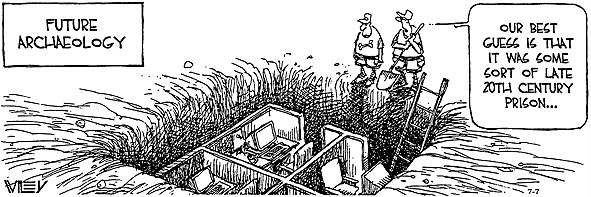
Subscribe to:
Posts (Atom)