
Road trip back to Northeastern Iowa for second time this month....

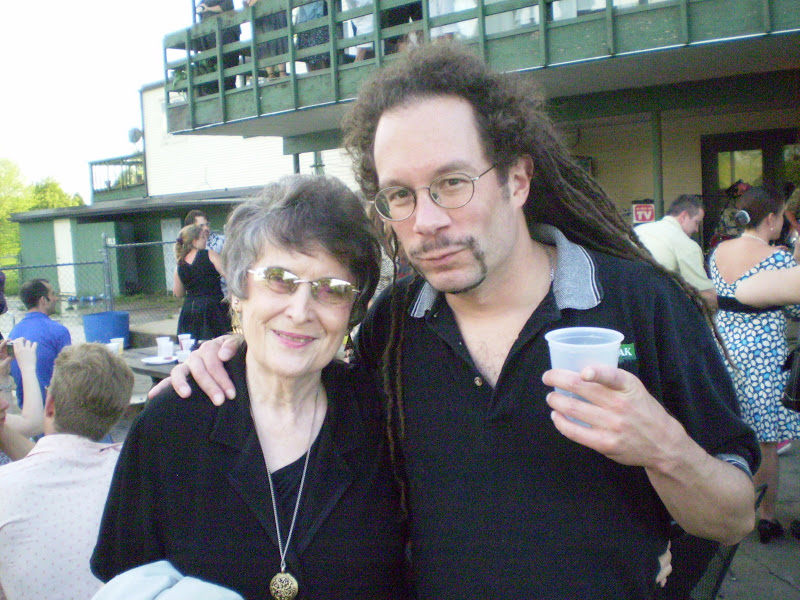
Some fellow local reprobates and myself did a last minute kayaking trip in Bluffton

A nice pose down the next morning after we had recovered with a good nights sleep.

Whatever happened to the cross-chest carry,
the head carry, the hair carry,
the tired-swimmer-put-your-hands-on-my-shoulders-
and-look-in-my-eyes retrieval, and what
became of the stride jump when you leap
from impossible heights and land with your head
above water so that you never lose sight
of your drowning person, or if he is close enough
where is the lifesaver ring attached to a rope
you can hurl at your quarry then haul
him to safety, or as a last resort
where is the dock onto which you tug
the unconscious soul, place him face down,
clear his mouth, straddle his legs, and press
with your hands on both sides of his rib cage
to the rhythm of out goes the bad air in
comes the good air and pray he will breathe,
hallowed methods we practiced over and over
the summer I turned eighteen to win
my Water Safety Instructor's badge,
and where is the boy from Ephrata, Pa.,
I made out with night after night in the lee
of the rotting boathouse at a small dank camp
on the lower Chesapeake Bay?
The Southern Review
Summer 2007
This poem is from is from the Daily Poetry archives. Have not been on the internet much this week but will make an effort to keep this up.

 This is a pottery sculpture from a local artist I picked up a few years back from a silent charity auction. I added the feather duster headdress yesterday.
Calexico on iLike - Get Sidebar




 |
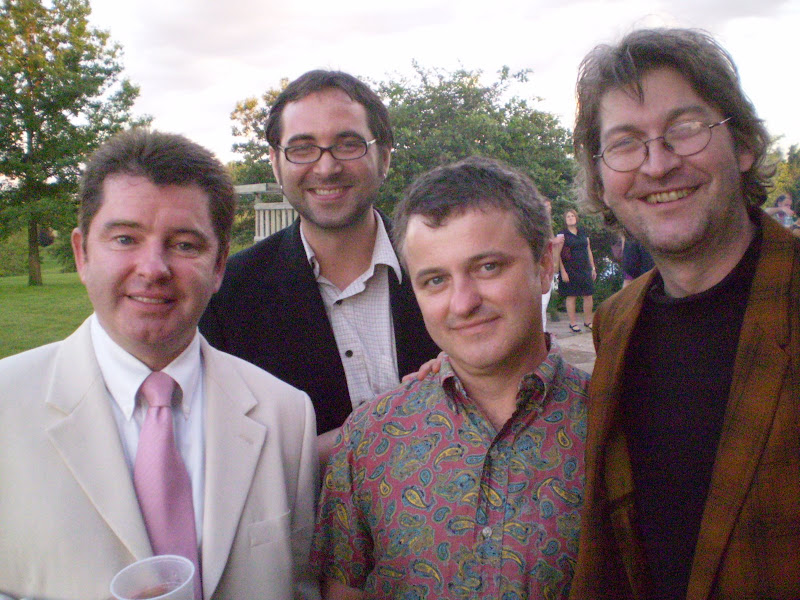
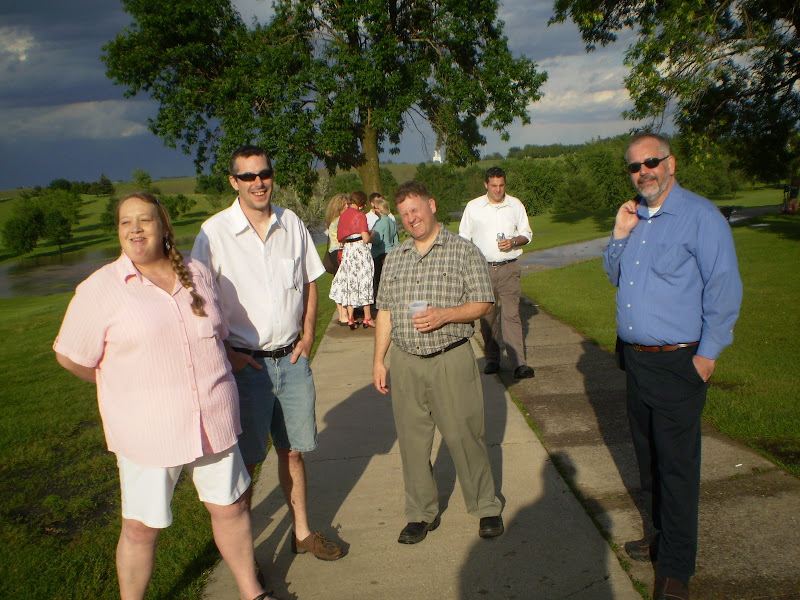
| Wedding |
 Check this out from the library recently. Review here. And here.
 New stamps this week celebrating two of the main influences in the above book.
 No Boat by Christoph Vandewiele
 Flooding on the Iowa River at the Park Road bridge in Iowa City, Iowa, on June 12, 2008 (Press-citizen / Dan Williamson)
 South Korean protesters carrying candles are blocked by police buses during a rally against US beef imports in Seoul on June 1, 2008. (KIM JAE-HWAN/AFP/Getty Images)
 City Park, Iowa City. Photo from Iowa City Press Citizen.

 (Watch Hill, Rhode Island. One of my favorite places for summer reading.)
 Normandy (picture is from a woman named Rachel. I found it on her blog via google)
[An address delivered for Memorial Day, May 30, 1884, at Keene, NH, before John Sedgwick Post No. 4, Grand Army of the Republic.]
Not long ago I heard a young man ask why people still kept up Memorial Day, and it set me thinking of the answer. Not the answer that you and I should give to each other-not the expression of those feelings that, so long as you live, will make this day sacred to memories of love and grief and heroic youth--but an answer which should command the assent of those who do not share our memories, and in which we of the North and our brethren of the South could join in perfect accord.
So far as this last is concerned, to be sure, there is no trouble. The soldiers who were doing their best to kill one another felt less of personal hostility, I am very certain, than some who were not imperilled by their mutual endeavors. I have heard more than one of those who had been gallant and distinguished officers on the Confederate side say that they had had no such feeling. I know that I and those whom I knew best had not. We believed that it was most desirable that the North should win; we believed in the principle that the Union is indissoluable; we, or many of us at least, also believed that the conflict was inevitable, and that slavery had lasted long enough. But we equally believed that those who stood against us held just as sacred conviction that were the opposite of ours, and we respected them as every men with a heart must respect those who give all for their belief. The experience of battle soon taught its lesson even to those who came into the field more bitterly disposed. You could not stand up day after day in those indecisive contests where overwhelming victory was impossible because neither side would run as they ought when beaten, without getting at least something of the same brotherhood for the enemy that the north pole of a magnet has for the south--each working in an opposite sense to the other, but each unable to get along without the other. As it was then , it is now. The soldiers of the war need no explanations; they can join in commemorating a soldier's death with feelings not different in kind, whether he fell toward them or by their side.
But Memorial Day may and ought to have a meaning also for those who do not share our memories. When men have instinctively agreed to celebrate an anniversary, it will be found that there is some thought of feeling behind it which is too large to be dependent upon associations alone. The Fourth of July, for instance, has still its serious aspect, although we no longer should think of rejoicing like children that we have escaped from an outgrown control, although we have achieved not only our national but our moral independence and know it far too profoundly to make a talk about it, and although an Englishman can join in the celebration without a scruple. For, stripped of the temporary associations which gives rise to it, it is now the moment when by common consent we pause to become conscious of our national life and to rejoice in it, to recall what our country has done for each of us, and to ask ourselves what we can do for the country in return.
Oliver Wendell Holmes, Jr. Iggy (aka Figge, as in he's as big as a museum)
 (Hopper in the window)

 (Flowers from side of the house.)


 My friend Josh and his son, Samuel James...
 Robert Doisneau, Clandestine Press, Quartier Opera, Paris 1944.
Were I to fall in love all over again, it would be
with this low ceiling, with the calm faces
of the two men going about their craft,
and with her, now twisting towards them,
beautiful, defiant and free.
Because we forget how beauty was once itself
and nothing else, how it held its stellar
moment in attic and cellar.
Because that is what beauty is, this compact
with time and the silence of concentration
on one subversive operation,
that requires courage and sacrifice
and never comes without a price.
by George Szirtes
Poetry, February 2008
Szirtes' has several poems as response to certain scenes from World War II. There are several more at the Poetry Magazine website. This is my favorite of the bunch. Although the one called Latrine with the first line of the poem ("Four poilus in a wood austerely shitting." ) is a very close second.
UPDATE: I added a few more music links.


 A couple things to lighten the season after dumptruck loads of snow piled up all around town. The first is a photo of a bouqet before the cats started to eat them. The second is a concert of Bob Mould that was on NPR here. His new album "District Line" is out now and he will be tour with a full band. Bring earplugs. Don't say I did not warn you. This morning I woke up and started watching the documentary "American Hardcore". (Not to be confused with the George C. Scott film, "Hardcore"). Anyway, it's a good way to start your day. Now if I can just find my Bad Brains cassettes...


